Friday, 13 November 2026 · IST · Uttar Pradesh + National · 9 items · 2 MCQs
Uttar Pradesh has proposed 32 projects worth about ₹5,000 crore across the seven-district Kashi-Vindhya City Economic Region, while RERA data show ₹52,866 crore invested in 249 realty projects in the first nine months of 2026. At the Swachh Survekshan 2025-26 awards, Lucknow placed 3rd among million-plus cities and Varanasi 3rd among river-front towns; nationally, CPI inflation rose to 6.09% in October, breaching the RBI's upper tolerance band.
Today at a glance — things to remember
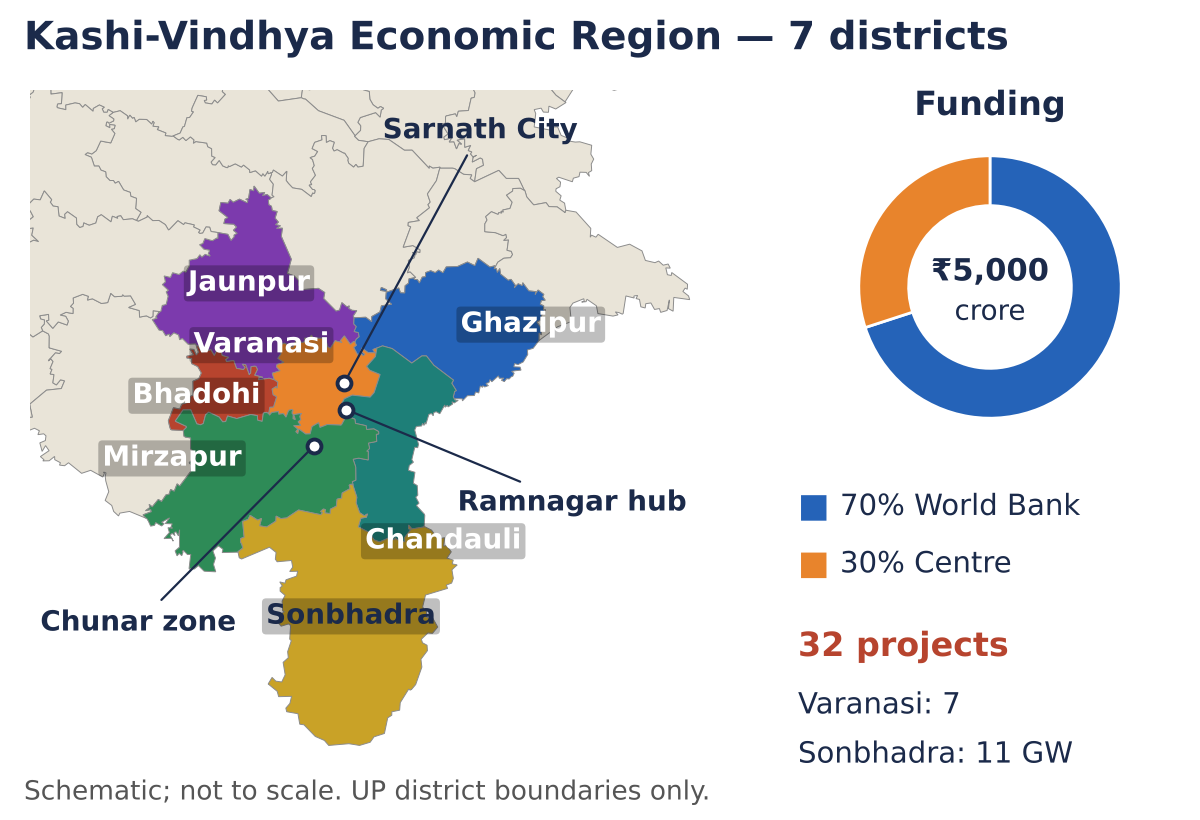
Kashi-Vindhya region: 32 projects, ~₹5,000 crore, 7 districts; 70% World Bank, 30% Centre.
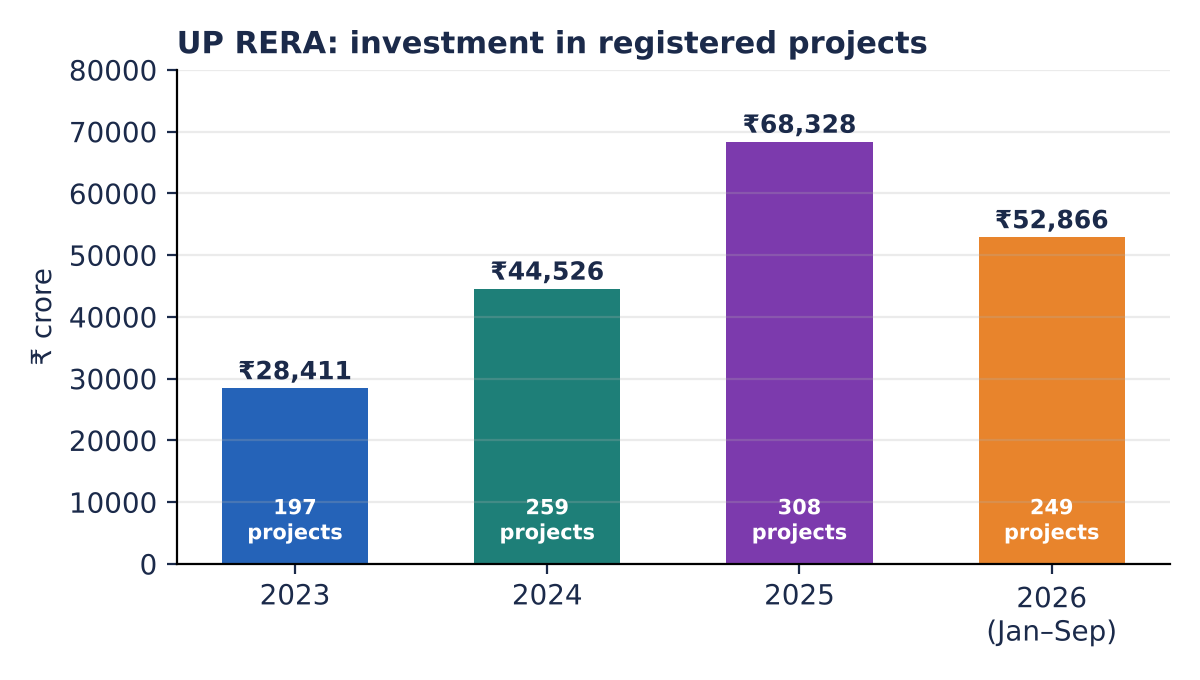
UP RERA: ₹52,866 crore in 249 projects (Jan–Sep 2026); 2025 total ₹68,328 crore.
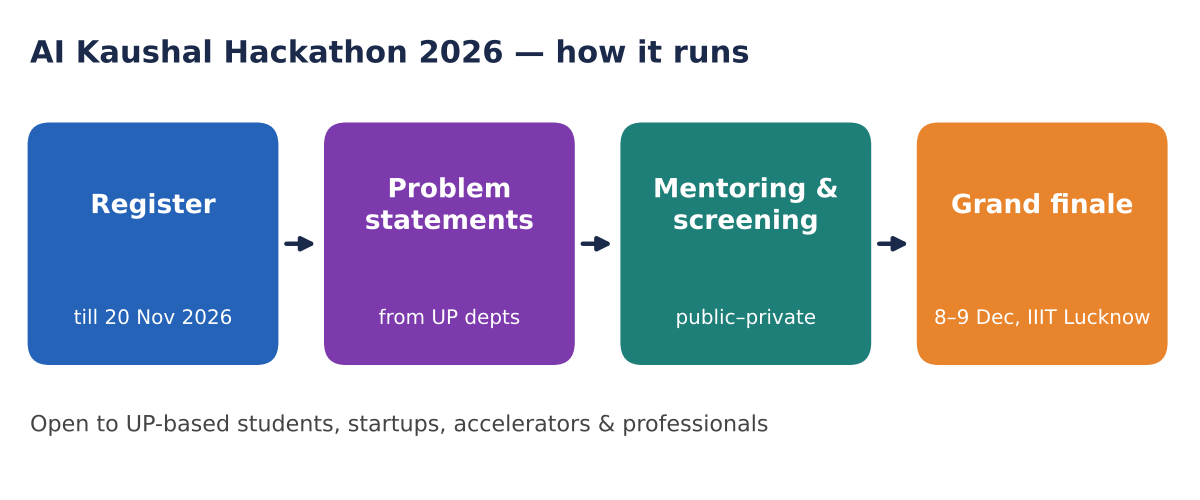
AI Kaushal Hackathon 2026: registrations till 20 Nov; finals 8–9 Dec at IIIT Lucknow.
Proposed funding: 70% World Bank and 30% Central Government.
Varanasi has the most projects (7): Ganga-side tourism city (1,000 acres), Kashi-themed tourism city (400 acres), Sarnath City (260 acres), multi-modal logistics hub at Ramnagar (100 acres).
Mirzapur: integrated industrial area near Chunar (1,000 acres); Sonbhadra: 11-GW power plant, cement-clinker plant and a downstream aluminium park.
The region was constituted by the state cabinet in Dec 2025 on the lines of the State Capital Region (SCR), covering about 23,815 sq km.
Way forward
Purvanchal has lagged western UP; a regional-economy model that blends religious tourism (Kashi, Vindhyachal, Sarnath) with power, cement and aluminium in the mineral belt of Sonbhadra can spread growth eastward.
Concept
City Economic Region: a planning approach that treats a cluster of districts around an anchor city as one economic unit with a common master plan and authority.
Map of Uttar Pradesh district boundaries highlighting the seven Kashi-Vindhya region districts with project markers, plus a donut showing 70% World Bank and 30% Central funding. — StudyForGS
2. UP real estate: ₹52,866 crore invested in 249 RERA projects in Jan–Sep 2026
Registrations: 197 (2023) → 259 (2024) → 308 (2025); around 400 expected in 2026.
Growth spreading beyond NCR: Lucknow, Mathura, Ayodhya, Varanasi, Prayagraj; township land norm cut from 25 to 12.5 acres.
UP RERA Chairman: Sanjay R. Bhoosreddy.
Way forward
Realty investment is a proxy for urban demand and confidence; its spread to religious-tourism cities shows how infrastructure (expressways, airports) and policy reform reshape the state's urban geography.
Concept
RERA Act, 2016: every real-estate project above the threshold must register with the state RERA before advertising or selling; 70% of buyer money goes into a separate escrow account.
Bar chart of UP RERA project investment: ₹28,411 crore in 2023, ₹44,526 crore in 2024, ₹68,328 crore in 2025 and ₹52,866 crore in January–September 2026. — StudyForGS
3. AI Kaushal Hackathon 2026 launched; finals at IIIT Lucknow on 8–9 December
GS-III: Science & technology, skill development | GS-VI: IT & electronics initiatives of UP
Context
The UP IT & Electronics Department, with an industry technology partner, launched a state-wide AI hackathon under the AI Kaushal programme.
Key facts
Open to UP-based students, startups, accelerators and professionals; registrations till 20 November 2026.
Finals: 8–9 December 2026 at IIIT Lucknow (academic partner).
Teams solve real public–private problem statements given by state departments.
Part of UP's push to become an AI and digital-economy hub (AI cities, data centres, semiconductor units).
Way forward
Hackathons turn governance problems into innovation challenges and build a local talent pipeline, linking skilling with the state's trillion-dollar economy goal.
Flowchart of the AI Kaushal Hackathon 2026: registration till 20 November, problem statements from state departments, mentoring and screening, finals on 8–9 December at IIIT Lucknow. — StudyForGS
4. Swachh Survekshan 2025-26: Lucknow 3rd among million-plus cities, Varanasi 3rd river-front town
New Swachh River Front Town category: 1. Rewa (MP), 2. Bilaspur (CG), 3. Varanasi (UP).
Scale: 4,751 cities, 2.70 crore citizen responses, 43 indicators in 10 domains, 60 national awards.
Organised by MoHUA; survey launched in 2016 with just 73 cities.
New 'Swachh Shehar Jodi' award pairs a mentor city with a mentee city (70 mentors, 191 mentees).
Way forward
Lucknow's consistent podium finish (it also topped Swachh Vayu Sarvekshan 2026) and Varanasi's river-front award reward Ganga-ghat sanitation and solid-waste reforms in UP's municipal bodies.
Concept
Swachh Bharat Mission–Urban launched on 2 October 2014; SBM-U 2.0 launched on 1 October 2021 with the goal of 'Garbage-Free Cities'.
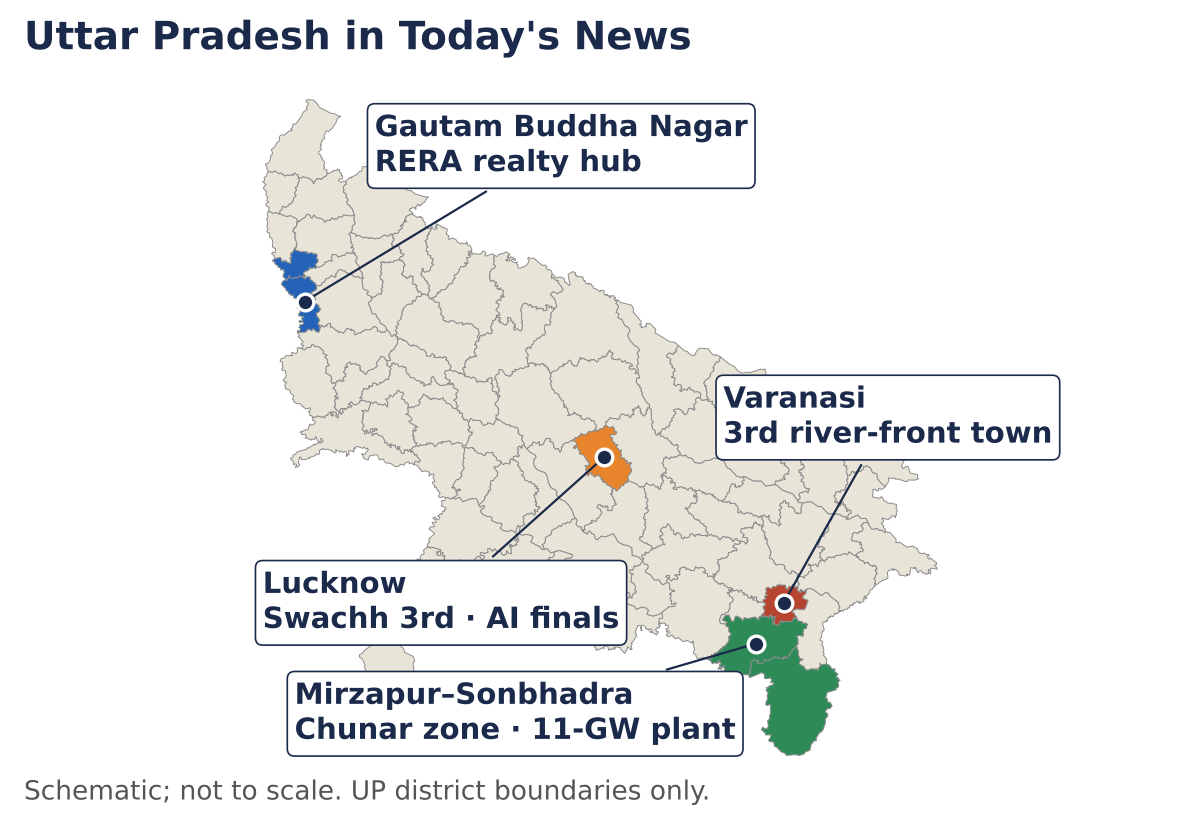
Locator map 'Uttar Pradesh in Today's News' marking Lucknow, Varanasi, Gautam Buddha Nagar, Mirzapur and Sonbhadra on real district boundaries. — StudyForGS
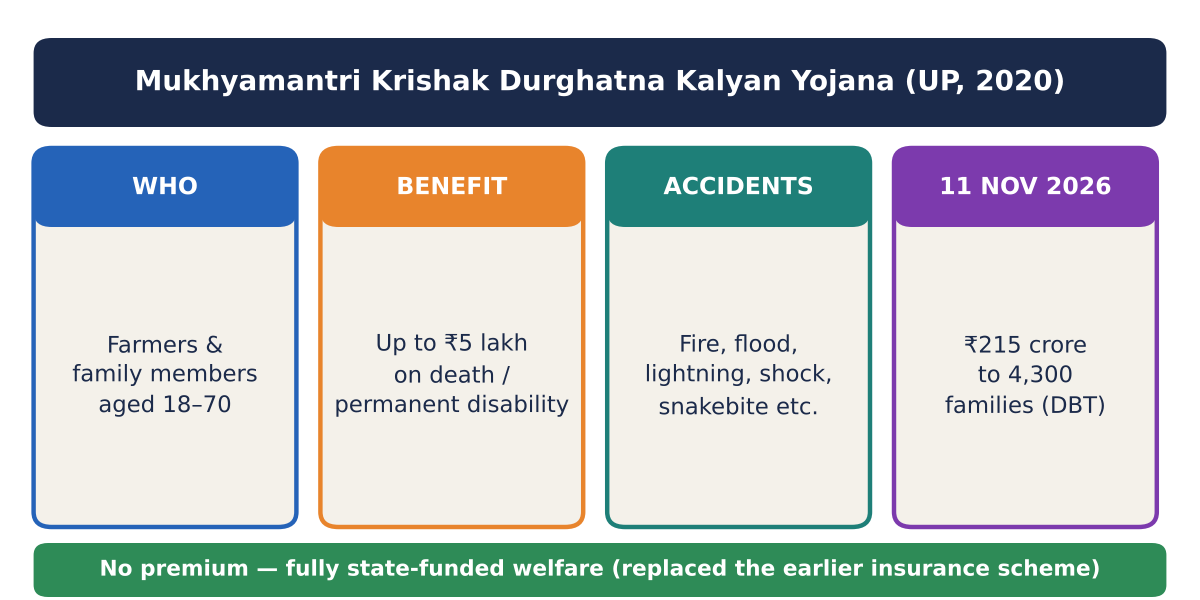
5. Mukhyamantri Krishak Durghatna Kalyan Yojana: ₹215 crore released to 4,300 farmer families
GS-II: Welfare schemes for vulnerable sections | GS-VI: Agricultural welfare schemes of UP
Context
On 11 November 2026 CM Yogi Adityanath released accident-relief money and handed appointment letters to new Revenue Department staff in Lucknow.
Key facts
₹215 crore transferred by DBT to 4,300 beneficiary farming families.
Scheme gives up to ₹5 lakh on accidental death or permanent disability of a farmer; covers ages 18–70.
Approved by the UP cabinet in January 2020, replacing the earlier Krishak Durghatna Bima Yojana (no premium charged).
Covered accidents include fire, flood, lightning, electric shock, snakebite and similar mishaps.
Same event: 1,146 Junior Assistants selected through UPSSSC got appointment letters in the Revenue Department.
Way forward
Moving from an insurance model to a direct state-funded welfare model removes claim-rejection hurdles and gives the farm family a social-security floor against sudden shocks.
Pillar diagram of the Mukhyamantri Krishak Durghatna Kalyan Yojana showing who is covered, the ₹5 lakh benefit, covered accidents and the 11 November 2026 release of ₹215 crore to 4,300 families. — StudyForGS
6. Farmer relief package: crop-loss compensation up 25–30%, disaster ex-gratia doubled to ₹8 lakh
GS-III: Disaster management, farm distress | GS-VI: Agriculture & relief in UP
Context
Ahead of Diwali (6 Nov) the state revised relief norms for farmers hit by rain, floods and drought in 2026.
Key facts
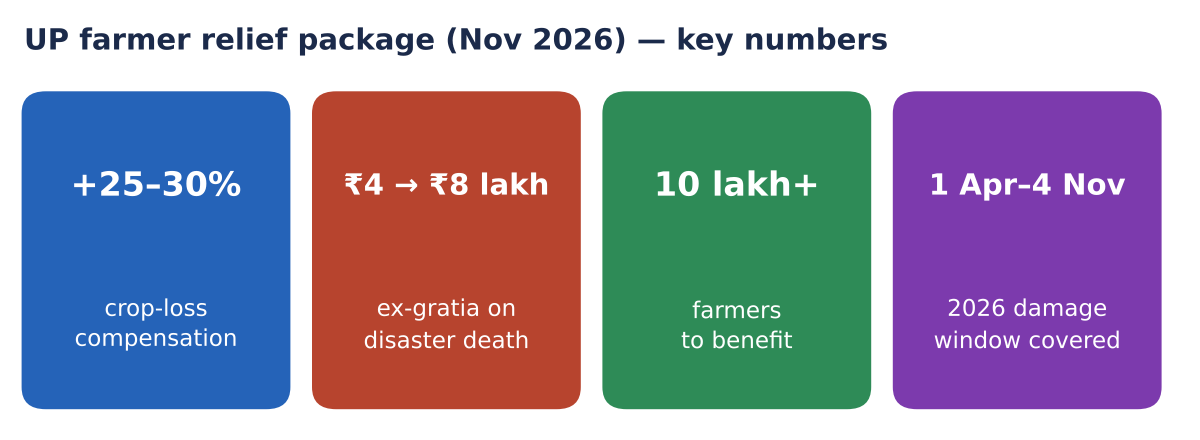
Crop-loss compensation raised by 25–30%.
Ex-gratia for death in natural disasters doubled from ₹4 lakh to ₹8 lakh.
Covers crop damage between 1 April and 4 November 2026; over 10 lakh farmers to benefit.
Also announced: ₹1,500 crore LPG refill subsidy for Ujjwala beneficiaries (free refills on Diwali and Holi) and Annapurna Bhojanalayas at mandis and labour hubs.
Way forward
Higher state top-ups over the SDRF norms show how states use their own budgets to cushion climate-linked farm losses; exams often ask about the SDRF/NDRF framework behind such relief.
Concept
SDRF is constituted under Section 48 of the Disaster Management Act, 2005; the Centre funds 75% (90% for NE/Himalayan states).
Stat tiles: crop-loss compensation up 25–30 percent, disaster ex-gratia raised from ₹4 lakh to ₹8 lakh, over 10 lakh farmers covered, damage window 1 April to 4 November 2026. — StudyForGS
7. Post-SIR voter rolls: missing UP voters can re-enrol through Form-6 without penal action
GS-II: Representation of the People Acts, Election Commission | GS-V: Electoral process in UP
Context
Ahead of the 2027 Assembly elections, UP's Chief Electoral Officer issued a directive on 10 November on voters dropped after the 2026 Special Intensive Revision (SIR).
Key facts
Voters on the roll before SIR 2026 but missing now may file Form-6 to re-enrol.
No action under Section 31 of the RP Act, 1950 (false declaration) for such applicants.
Directive by UP CEO Navdeep Rinwa; all District Election Officers told to publicise it.
Remember forms: Form-6 new enrolment, Form-7 objection/deletion, Form-8 correction/shifting.
Way forward
Clean rolls and inclusive rolls must go together; this directive protects the right to vote (Article 326) while keeping the revision exercise credible.
Concept
RP Act, 1950 deals with preparation of electoral rolls and delimitation; RP Act, 1951 deals with conduct of elections and disqualifications.
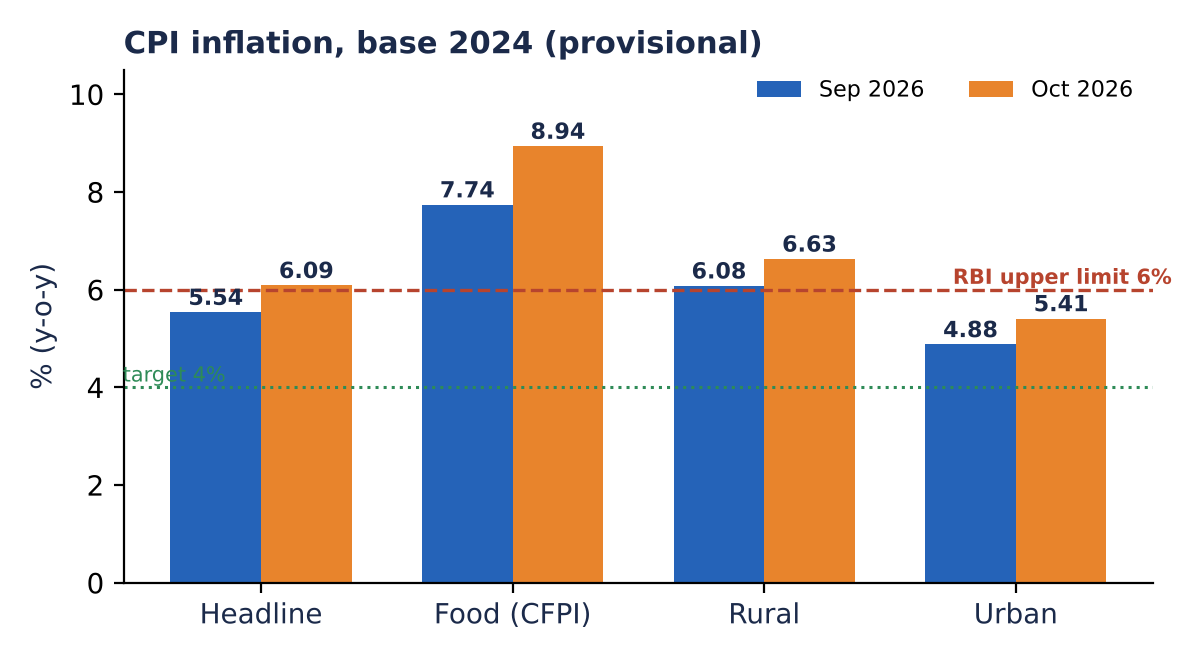
8. CPI inflation rises to 6.09% in October 2026, above RBI's upper tolerance limit
ECONOMYUPPSC: Prelims + Mains GS-III (economy)
Syllabus linkage
GS-III: Inflation, monetary policy, food prices
Context
MoSPI released provisional CPI data (new base year 2024) on 12 November 2026.
RBI target: 4% ± 2% (band 2–6%) under the flexible inflation-targeting framework.
November CPI due on 14 December 2026.
Way forward
Food-led, rural-heavy inflation hits a farm state like UP hardest; it narrows room for rate cuts and strengthens the case for supply-side steps (buffer stocks, storage, onion price stabilisation).
Concept
Monetary Policy Committee (Section 45ZB, RBI Act): 6 members; RBI must report to the government if inflation stays outside the band for three consecutive quarters.
Grouped bar chart comparing September and October 2026 inflation: headline 5.54 to 6.09 percent, food 7.74 to 8.94, rural 6.08 to 6.63, urban 4.88 to 5.41, with the 6 percent upper tolerance line. — StudyForGS
9. Booker Prize 2026: M. John Harrison becomes oldest winner, for 'The End of Everything'
NATIONALUPPSC: Prelims (awards & books)
Syllabus linkage
Current events of national & international importance: awards
Context
The winner was announced in London on 9 November 2026 (10 November in India).
Key facts
British writer M. John Harrison, aged 81 — the oldest Booker winner ever.
'The End of Everything' is the first science-fiction novel to win the Booker.
Booker Prize established 1969; open to novels in English published in the UK/Ireland.
2025 winner: David Szalay for 'Flesh'.
Way forward
Award questions are common in UPPSC Prelims; link 'firsts' and 'oldest/youngest' records, which are the usual MCQ hooks.
Concept
International Booker Prize (separate award) is for fiction translated into English; Geetanjali Shree's 'Tomb of Sand' won it in 2022.
📜 Asked before in the exam — previous-year question on this topic
BPSC Prelims 2022 (67th CCE)Who has received the International Booker Prize for her novel, Tomb of Sand (Ret Samadhi)?
Linked because this news is about the same topic. The answer is as per the official key of that year.
Data point of the day
₹52,866 crore
UP RERA investment, Jan–Sep 2026 Across 249 registered projects with 73,400+ units; full-year 2025 was ₹68,328 crore.
Prelims rapid-fire
Lucknow — 3rd cleanest million-plus city, Swachh Survekshan 2025-26 (also No. 1 in Swachh Vayu Sarvekshan 2026).
Varanasi — 3rd in the new Swachh River Front Town category (Rewa 1st).
Sonbhadra — proposed 11-GW power plant and aluminium park under the Kashi-Vindhya plan.
IIIT Lucknow — venue of AI Kaushal Hackathon finals, 8–9 December 2026.
Uttarakhand Mahotsav 2026 held in Lucknow; recall UP's first CM Govind Ballabh Pant was from present-day Uttarakhand.
Weather — temperatures in UP forecast to fall 3–5°C between 13–26 November; colder nights in Terai, western plains and Vindhya.
Practice MCQs — UPPSC Prelims pattern
Q1. Which of the following districts is NOT part of the Kashi-Vindhya City Economic Region of Uttar Pradesh?
Bhadohi
Sonbhadra
Prayagraj
Ghazipur
Show answer
Answer: C The region covers 7 districts: Varanasi, Chandauli, Ghazipur, Jaunpur, Mirzapur, Bhadohi and Sonbhadra. Prayagraj is not included (a separate Prayagraj-Chitrakoot authority exists).
Q2. Consider the following about Swachh Survekshan 2025-26: 1. Lucknow ranked 3rd in the million-plus population category. 2. Varanasi ranked 1st in the Swachh River Front Town category. 3. The survey is conducted by the Ministry of Jal Shakti. Which of the statements given above is/are correct?
1 only
1 and 2 only
2 and 3 only
1, 2 and 3
Show answer
Answer: A Only 1 is correct. Varanasi was 3rd (Rewa 1st, Bilaspur 2nd) and the survey is run by the Ministry of Housing and Urban Affairs, not Jal Shakti.
Mains practice question
Q. Regional economic zones such as the Kashi-Vindhya City Economic Region can correct intra-state imbalances in Uttar Pradesh. Discuss with reference to Purvanchal. (125 words)
Hint / approach
Intro: east–west gap in UP. Body: tourism (Kashi, Sarnath, Vindhyachal), mineral & power belt of Sonbhadra, logistics at Ramnagar, external funding (70:30). Challenges: land, displacement, environment of Vindhya/Kaimur, coordination. Conclude with SCR model and Viksit UP goal.