Edible oil import duties slashed from today, Supreme Court sends the CEC appointment law to a Constitution Bench, and India showcases its health record at UNGA-81
Thursday, 24 September 2026 · IST · National & International · 11 items · 2 MCQs
The Centre cut basic customs duty on crude and refined edible oils with effect from 24 September 2026 to cool festive-season food inflation, while the RBI absorbed ₹1.25 lakh crore of surplus liquidity through an overnight VRRR auction. A split Supreme Court bench referred the challenge to the CEC and ECs (Appointment) Act, 2023 to a larger Constitution Bench. At UNGA-81 India presented its universal health coverage, hepatitis and sickle cell numbers and co-launched the OneSCD partnership, even as the Planetary Health Check 2026 and a Super El Niño mortality projection sharpened the climate alarm.
Today at a glance — things to remember
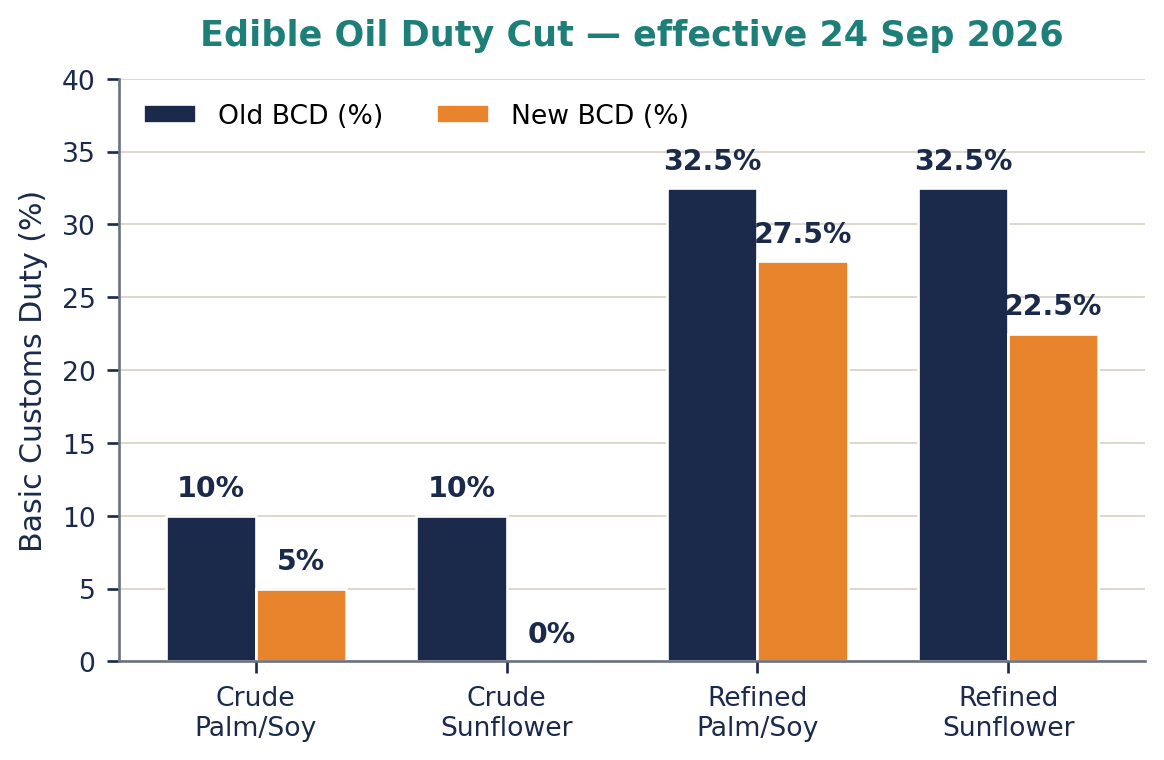
Basic customs duty on crude sunflower oil cut to 0%; crude palm and soy to 5% — effective 24 Sep 2026.
RBI conducts an overnight VRRR auction of ₹1,25,000 crore; repo rate steady at 5.25%.
Supreme Court refers the CEC & ECs (Appointment) Act, 2023 challenge to a Constitution Bench after a 1:1 split.
India at UNGA-81: 1.8 lakh+ Ayushman Arogya Mandirs, 90 crore ABHA IDs, co-launch of OneSCD.
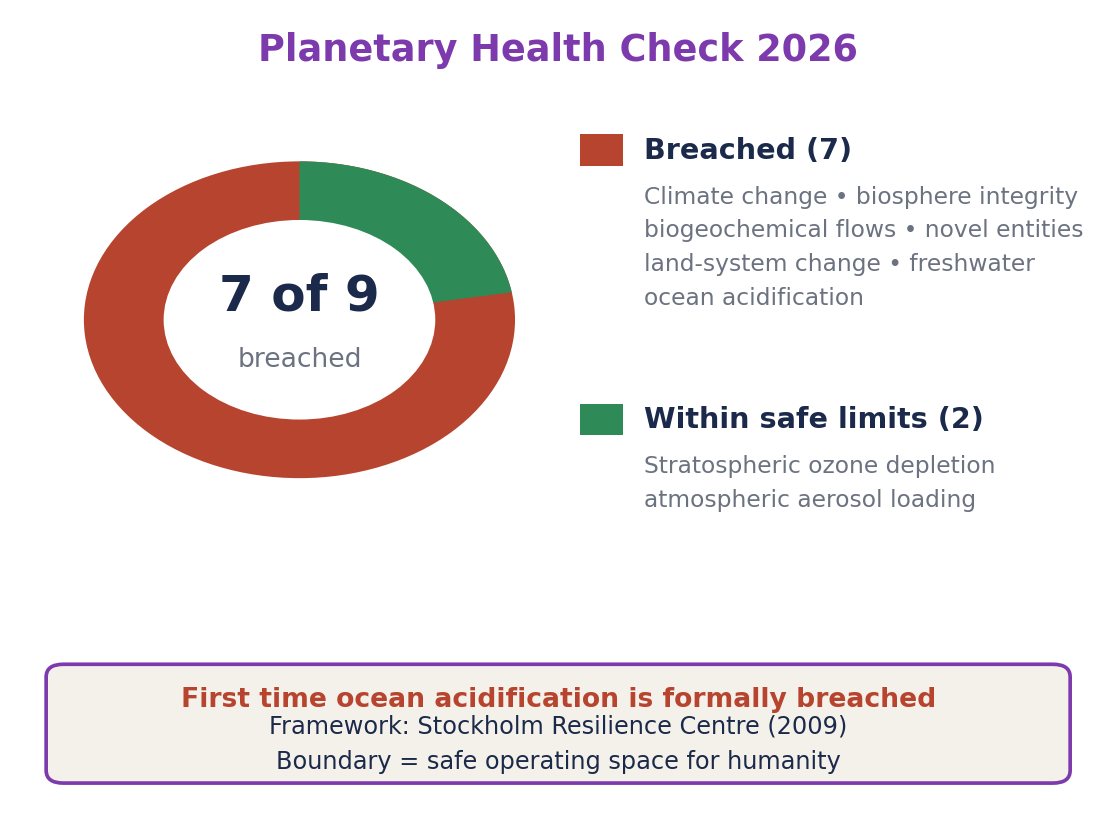
Planetary Health Check 2026: seven of nine planetary boundaries now transgressed.
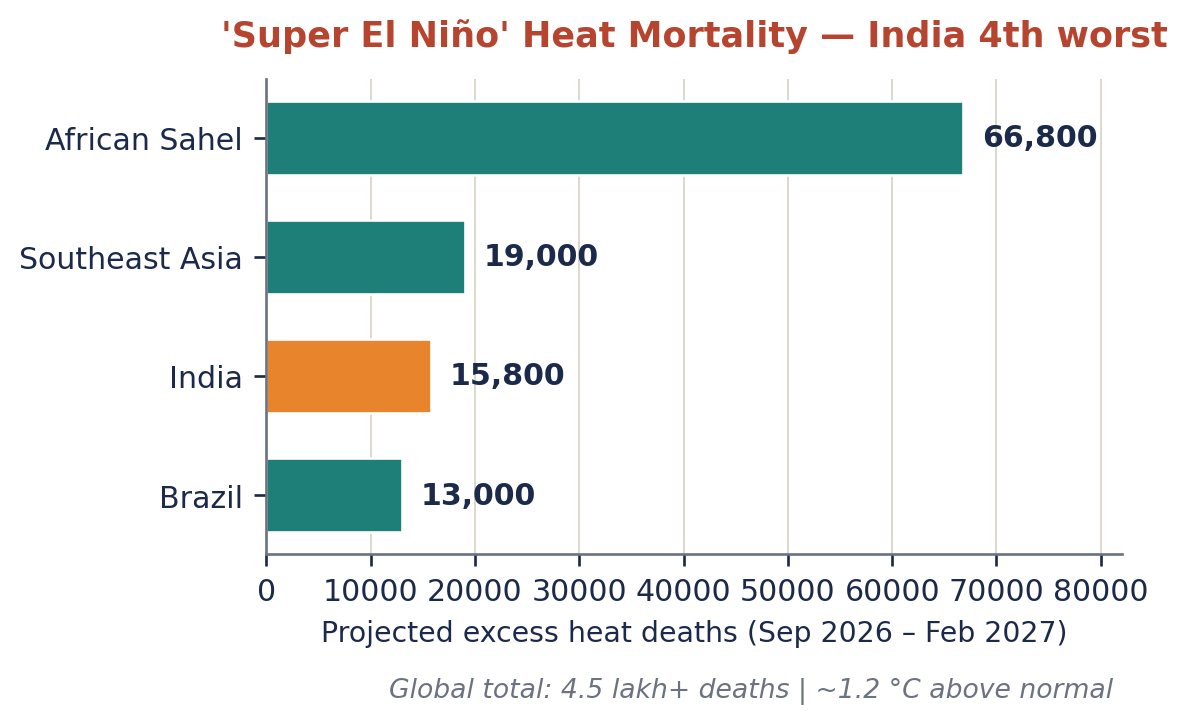
Super El Niño projected to cause 15,800 excess heat deaths in India — 4th highest globally.
DDU-GKY 2.0 training starts October 2026 — 34,920 youth across 1,164 batches.
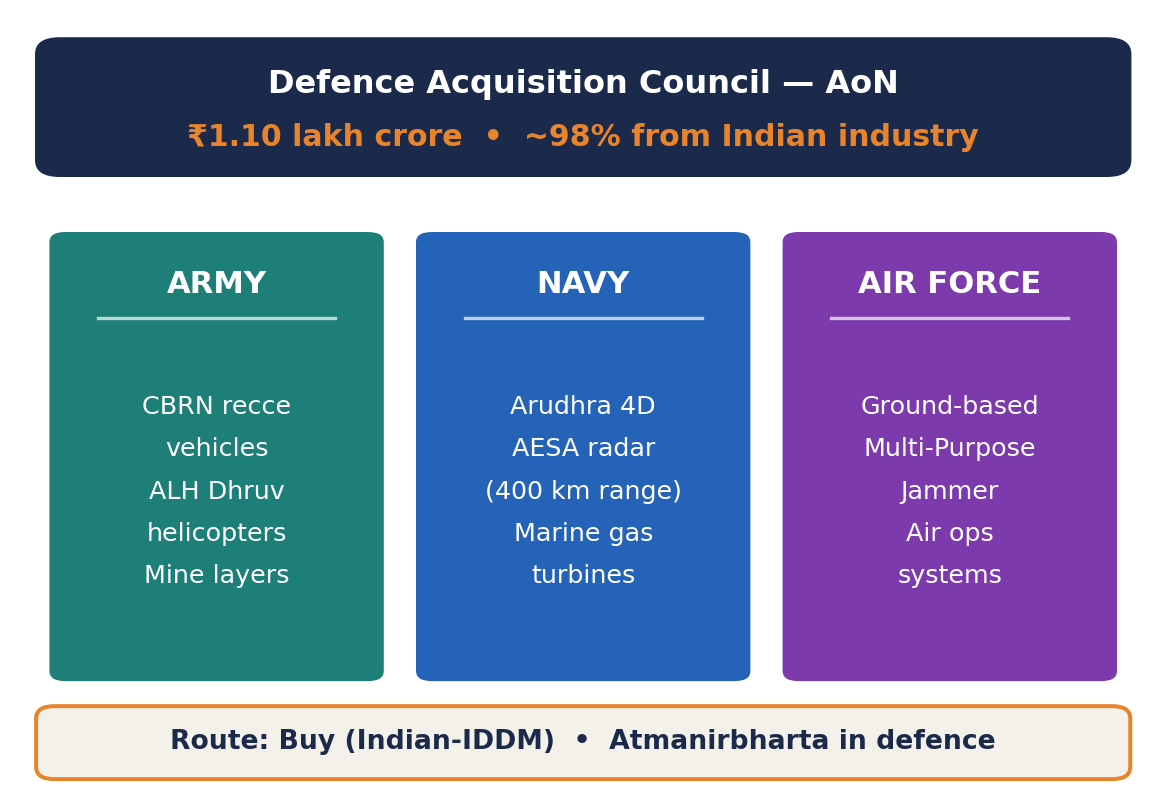
DAC clears procurement worth about ₹1.10 lakh crore, nearly 98% from Indian industry.
ISRO lays the foundation for an Advanced Radar Research Facility at Chandrapur, Assam.
India flags concerns over the new US sanctions law on Russian and Iranian oil at UNGA sidelines.
Detailed notes
1. Centre Slashes Import Duty on Edible Oils from Today
ECONOMYCOMMON: Prelims + Mains GS3
Syllabus linkage
GS-III — Indian Economy: taxation, inflation, agricultural marketing and food processing. Prelims pointers: Basic Customs Duty, Agriculture Infrastructure and Development Cess, effective duty vs BCD, edible oil import dependence.
Context
With effect from 24 September 2026, the government has reduced the Basic Customs Duty (BCD) on both crude and refined edible oils. The change was notified through Notification No. 31/2026-Customs dated 23 September 2026, ahead of the festive season.
Key facts
Crude palm and crude soybean oil: BCD cut from 10% to 5%.
Crude sunflower oil: BCD cut from 10% to 0% — a full exemption.
Refined palm and refined soybean oil: BCD cut from 32.5% to 27.5%.
Refined sunflower oil: BCD cut from 32.5% to 22.5%.
The wider crude–refined duty gap deliberately protects the domestic refining industry while easing retail prices.
Way forward
Duty cuts give quick relief but raise the import bill; durable correction needs the National Mission on Edible Oils – Oil Palm to lift domestic oilseed yields and cut import dependence.
Concept
Basic Customs Duty is levied under the Customs Act, 1962 and the Customs Tariff Act, 1975. Effective duty = BCD + AIDC + Social Welfare Surcharge. Inverted duty structure occurs when inputs are taxed higher than finished goods — avoided here by keeping refined-oil duty above crude.
Grouped bar chart comparing old and new basic customs duty on crude and refined palm, soybean and sunflower oils, effective 24 September 2026. — StudyForGS
2. 'Super El Niño' May Cause 15,800 Extra Heat Deaths in India
REPORTCOMMON: Prelims + Mains GS3
Syllabus linkage
GS-III — Environment: climate change, disaster management. GS-II — issues relating to health. Prelims pointers: ENSO, El Niño vs La Niña, Walker circulation, Heat Action Plans.
Context
A study released on 23 September 2026 projects that the current Super El Niño — described as the strongest on record — will cause over 4.5 lakh excess heat-related deaths worldwide, of which about 2.39 lakh fall in the September 2026 – February 2027 window.
Key facts
India: about 15,800 additional heat deaths, the fourth highest after Nigeria, Sudan and Indonesia.
Peak mortality in India is projected for December to February.
African Sahel worst hit at 66,800 deaths; Southeast Asia 19,000+; Brazil 13,000.
Global temperatures projected about 1.2 °C above normal through mid-2027.
44% more extremely hot days than the 1996–2025 baseline.
Way forward
Scale up city-level Heat Action Plans, early-warning systems, cooling shelters and heat-adjusted work schedules, and consider notifying heatwave as a disaster for compensation purposes.
Concept
El Niño Southern Oscillation (ENSO) is the coupled ocean–atmosphere oscillation in the tropical Pacific. During El Niño, trade winds weaken, warm water shifts eastward and the Walker circulation flips — typically producing a weak South-West Monsoon over India.
Horizontal bar chart of projected excess heat deaths by region for September 2026 to February 2027, with India highlighted at 15,800. — StudyForGS
3. Planetary Health Check 2026: 7 of 9 Boundaries Breached
ENVIRONMENTCOMMON: Prelims + Mains GS3
Syllabus linkage
GS-III — Environment: conservation, environmental pollution and degradation. Prelims pointers: the nine planetary boundaries, ocean acidification, novel entities, biosphere integrity.
Context
The Planetary Health Check 2026, released during Climate Week, finds that seven of the nine planetary boundaries have now been transgressed, with trends worsening across the board.
Ocean acidification is the most recent boundary to be formally crossed.
Within safe limits (2): stratospheric ozone depletion and atmospheric aerosol loading.
Ozone recovery is credited to the Montreal Protocol, 1987 — evidence that treaties work.
The report warns of cascading tipping points across interlinked Earth systems.
Way forward
India's response must couple Mission LiFE and the updated NDC with restoration of blue-carbon ecosystems and stricter control of novel entities such as plastics and synthetic chemicals.
Concept
The planetary boundaries framework was proposed by the Stockholm Resilience Centre in 2009 (Johan Rockström and colleagues). It defines a safe operating space for humanity across nine Earth-system processes; crossing a boundary raises the risk of irreversible, non-linear change.
Donut chart showing seven of nine planetary boundaries breached, with the breached and safe boundaries listed alongside. — StudyForGS
The Defence Acquisition Council (DAC), chaired by the Defence Minister, has granted Acceptance of Necessity (AoN) to proposals worth about ₹1.10 lakh crore, with nearly 98% of the value to be sourced from Indian industry.
Key facts
Army: CBRN reconnaissance vehicles, High Mobility Vehicles, self-propelled mechanical mine layers and additional ALH Dhruv helicopters.
Navy: Arudhra radar — a 4D AESA system with about 400 km surveillance range — and a Marine Gas Turbine programme.
Air Force: a Ground-Based Multi-Purpose Jammer for electronic warfare.
Procurement is routed largely through the Buy (Indian-IDDM) category.
Beneficiaries include DPSUs, private firms, MSMEs and start-ups.
Way forward
Converting AoN into signed contracts within the timelines of DAP 2020, and deepening the Defence Industrial Corridors in Uttar Pradesh and Tamil Nadu, will decide whether indigenisation targets are actually met.
Concept
AoN is the first formal approval in India's capital acquisition cycle under the Defence Acquisition Procedure (DAP) 2020. Buy (Indian-IDDM) — Indigenously Designed, Developed and Manufactured — is the most preferred category, requiring Indian design and a minimum 50% indigenous content.
Three-pillar diagram showing Army, Navy and Air Force items cleared in the Defence Acquisition Council package worth about one lakh ten thousand crore rupees. — StudyForGS
5. ISRO to Build Advanced Radar Research Facility in Assam
SCI-TECHCOMMON: Prelims + Mains GS3
Syllabus linkage
GS-III — Science & Technology: developments in space, indigenisation. Prelims pointers: ISTRAC, space situational awareness, Project NETRA, ground segment of a space mission.
Context
The foundation stone has been laid for the ISTRAC Advanced Radar Research Facility (IARRF) at Chandrapur in Kamrup Metropolitan district, Assam — the North-East's first major space-research installation.
Key facts
ISTRAC is ISRO's Telemetry, Tracking and Command Network, headquartered at Bengaluru.
The facility will support satellite tracking and space situational awareness.
The eastern longitude improves ground-station coverage for launches and low-earth-orbit passes.
Complements ISRO's Project NETRA for tracking space debris and orbital objects.
Expected to seed a space-technology ecosystem and skilled jobs in the North-East.
Way forward
Linking the facility to IN-SPACe-enabled private players and to regional universities can convert a tracking station into a genuine space-research cluster.
Concept
Every space mission has three segments — space segment (the satellite), ground segment (tracking, telemetry and command) and user segment. Space Situational Awareness is the capability to detect, track and predict objects in orbit, which is central to collision avoidance and debris management.
6. Anti-Narcotics Task Force Meet Sets 2029 Drug-Free Target
DEFENCECOMMON: Prelims + Mains GS3
Syllabus linkage
GS-III — Internal Security: organised crime, money laundering, security challenges in border areas. Prelims pointers: NCB, NDPS Act 1985, PITNDPS Act 1988, Golden Crescent and Golden Triangle.
Context
The 3rd National Conference of Anti-Narcotics Task Forces (ANTF) set a target of eliminating the organised drug trade by 31 December 2029, and marked a strategic shift from seizure-centric policing to dismantling trafficking networks.
Key facts
Focus areas: financial investigations, regulation of precursor chemicals and cross-border extradition.
Districts are being classified as manufacturing origins, transit corridors or consumption hubs.
46,780 registered Nashamukt Mitras have been deployed as community volunteers.
New NCB complexes are coming up at Lucknow and Dehradun.
Key challenges flagged: synthetic drug labs, darknet markets and low conviction rates.
Way forward
Pair enforcement with demand reduction under the Nasha Mukt Bharat Abhiyaan, strengthen forensic and prosecution capacity, and use financial intelligence to attack the proceeds of crime rather than only the consignment.
Concept
The NDPS Act, 1985 is the parent law; the PITNDPS Act, 1988 allows preventive detention of traffickers. India sits between the Golden Crescent (Afghanistan, Iran, Pakistan) and the Golden Triangle (Myanmar, Laos, Thailand), making it both a transit and a destination market.
7. India Flags US Sanctions Law on Russian Oil at UNGA Sidelines
IRCOMMON: Prelims + Mains GS2
Syllabus linkage
GS-II — International Relations: bilateral agreements involving India, effect of policies of developed countries on India's interests. Prelims pointers: secondary sanctions, strategic autonomy, energy security.
Context
On the sidelines of UNGA-81 in New York, India's External Affairs Minister met the US Secretary of State and conveyed India's concerns over the new US law providing for sanctions relating to Russian and Iranian oil purchases.
Key facts
The legislation raises the prospect of secondary sanctions on third-country buyers of discounted Russian crude.
Energy security is central: crude oil is India's largest single import by value.
Both sides agreed to continue cooperation in priority areas and on the Indo-Pacific partnership.
India's position rests on strategic autonomy and on sourcing energy at least cost for its consumers.
The meeting came alongside a broader tariff dispute in the India–US trade relationship.
Way forward
India should keep diversifying crude sources, accelerate the strategic petroleum reserve build-out, and push for carve-outs for developing economies in extraterritorial sanctions regimes.
Concept
Secondary sanctions penalise third-country entities that trade with a sanctioned state, and are extraterritorial in effect. Strategic autonomy is India's doctrine of issue-based alignment without joining any bloc — the modern successor to non-alignment.
8. Western Ghats ESA Notification Still Stuck in State Objections
ENVIRONMENTCOMMON: Prelims + Mains GS3
Syllabus linkage
GS-III — Environment: conservation, biodiversity hotspots. GS-II — Centre–State relations in environmental governance. Prelims pointers: Western Ghats, ESA, Gadgil and Kasturirangan reports, Environment (Protection) Act 1986.
Context
The long-pending Ecologically Sensitive Area (ESA) notification for the Western Ghats remains unresolved, with Karnataka rejecting the seventh draft and seeking a cadastral survey before final demarcation.
Key facts
The Western Ghats span about 1,64,280 sq km across six States.
The Kasturirangan Committee recommended ESA status for about 37% of the range — roughly 60,000 sq km.
Proposed curbs: a complete ban on mining and quarrying, run-of-the-river hydel projects with at least 30% ecological flow, and no new townships.
Construction is capped at about 20,000 sq metres in ESA zones.
States object that satellite mapping without ground-truthing hurts agrarian livelihoods.
Way forward
A village-level cadastral demarcation with genuine consultation under the Forest Rights Act, 2006, plus eco-development and payment-for-ecosystem-services models, can break the deadlock between conservation and livelihoods.
Concept
The Western Ghats are one of the world's eight hottest biodiversity hotspots and a UNESCO World Heritage Site. ESAs are notified under the Environment (Protection) Act, 1986. The Gadgil Committee (2011) proposed a far larger ESA and a Western Ghats Ecology Authority; the Kasturirangan Committee (2013) scaled it down.
9. SC Refers CEC Appointment Law to a Constitution Bench
POLITYCOMMON: Prelims + Mains GS2
Syllabus linkage
GS-II — Polity: constitutional bodies, separation of powers, appointment to constitutional posts. Prelims pointers: Article 324, Election Commission of India, Constitution Bench, Anoop Baranwal case.
Context
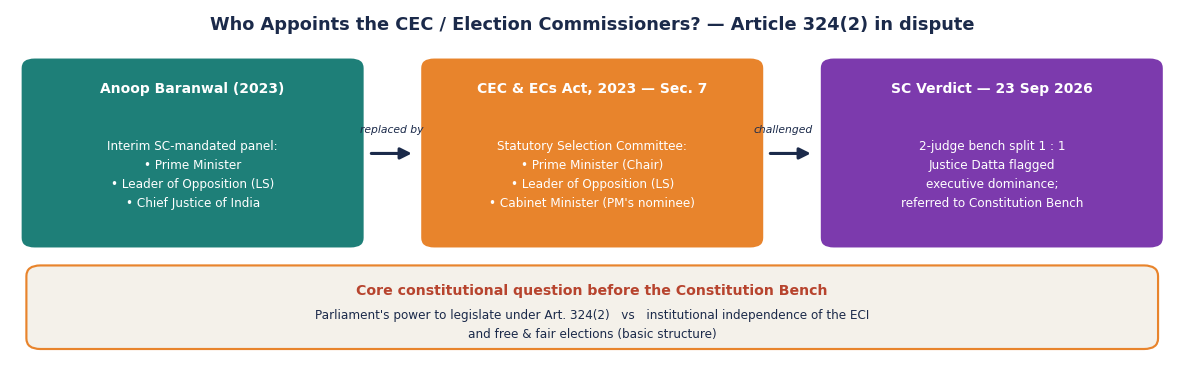
On 23 September 2026 a two-judge Supreme Court bench delivered a 1:1 split verdict on the challenge to the Chief Election Commissioner and other Election Commissioners (Appointment, Conditions of Service and Term of Office) Act, 2023, and referred the matter to the Chief Justice of India for a Constitution Bench.
Key facts
The challenge targets Section 7 of the 2023 Act, which creates a three-member Selection Committee.
Committee composition: Prime Minister (Chair), Leader of Opposition in the Lok Sabha and a Union Cabinet Minister nominated by the PM.
It displaced the interim panel of PM + LoP + CJI laid down in Anoop Baranwal v. Union of India (2023).
Justice Dipankar Datta observed that the ECI must not only be independent but also appear independent, calling the LoP's role potentially 'largely ornamental'.
The bench avoided a three-judge referral to prevent further delay, sending it straight up.
Way forward
The Constitution Bench must reconcile Parliament's power under Article 324(2) with the institutional insulation of the ECI — options include a neutral selection panel, fixed tenure and a post-retirement cooling-off period.
Concept
Article 324 vests superintendence, direction and control of elections in the Election Commission of India. Under Article 324(2), appointments are made by the President, subject to any law made by Parliament. A Constitution Bench under Article 145(3) has a minimum of five judges and hears substantial questions of constitutional interpretation.
Flowchart contrasting the interim Anoop Baranwal selection panel with the statutory committee under the 2023 Act, and the 2026 Supreme Court referral to a Constitution Bench. — StudyForGS
10. India Showcases Health Gains, Co-Launches OneSCD at UNGA-81
HEALTHCOMMON: Prelims + Mains GS2
Syllabus linkage
GS-II — Governance: issues relating to health, welfare schemes, India and international institutions. Prelims pointers: Ayushman Bharat, ABHA, eSanjeevani, National Viral Hepatitis Control Programme, sickle cell disease.
Context
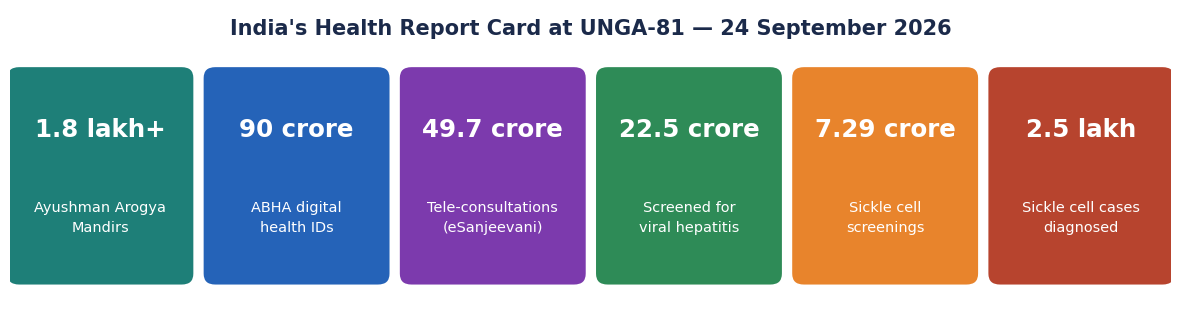
At the 81st session of the UN General Assembly on 24 September 2026, India presented its record on Universal Health Coverage (UHC), hepatitis elimination and sickle cell care, and co-hosted the launch of the OneSCD global partnership.
Key facts
Over 1.8 lakh Ayushman Arogya Mandirs now deliver primary, secondary and tertiary care.
More than 90 crore citizens hold an ABHA digital health ID; over 49.7 crore tele-consultations delivered.
National Viral Hepatitis Control Programme (2018): about 22.5 crore screened across 1.80 lakh facilities and 1,039 treatment centres; elimination target 2030.
OneSCD partners include Nigeria, WHO, UNICEF and Africa CDC.
Way forward
Screening scale must now convert into treatment outcomes — assured supply of hydroxyurea, genetic counselling, and integration of sickle cell care into Ayushman Bharat benefit packages.
Concept
Universal Health Coverage means all people receive needed health services without financial hardship — it is SDG target 3.8. Sickle cell disease is an autosomal recessive haemoglobin disorder concentrated among tribal populations in central India.
Row of six statistic tiles showing India's health coverage numbers presented at UNGA-81 including Ayushman Arogya Mandirs, ABHA IDs and sickle cell screenings. — StudyForGS
11. DDU-GKY 2.0 Rural Skilling Batches to Begin in October
SOCIETYCOMMON: Prelims + Mains GS2
Syllabus linkage
GS-II — Governance: welfare schemes for vulnerable sections, mechanisms and performance. GS-III — employment and skill development. Prelims pointers: Ministry of Rural Development, NRLM, placement-linked skilling.
Context
The Ministry of Rural Development will start DDU-GKY 2.0 training batches from October 2026 across most States and Union Territories — the relaunched version of the Deen Dayal Upadhyaya Grameen Kaushalya Yojana, the placement-linked skilling arm of the rural livelihoods mission.
Key facts
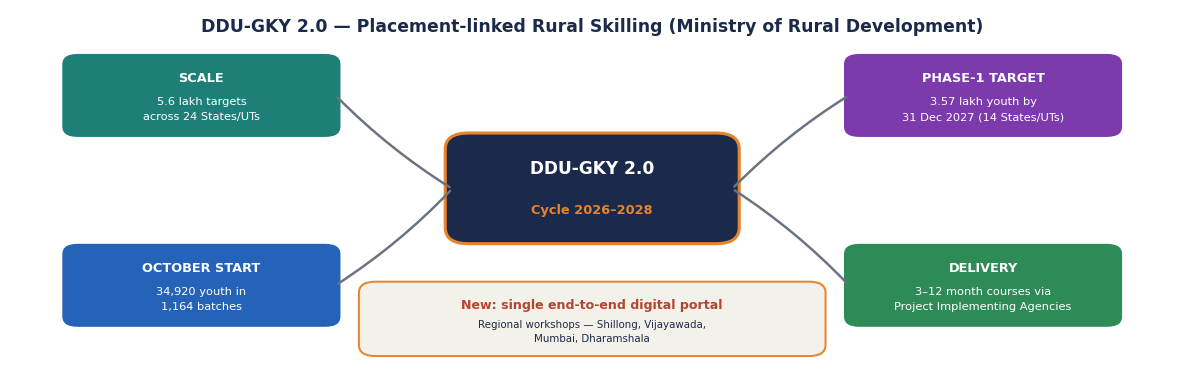
34,920 rural youth will begin training in 1,164 batches in October 2026.
Overall allocation of 5.6 lakh targets across 24 States/UTs and over 1,200 projects.
Phase-1 target: 3,57,112 youth in 14 States/UTs by 31 December 2027.
Courses run 3 to 12 months, delivered through Project Implementing Agencies (PIAs), in a 2026–2028 cycle.
A new end-to-end digital portal will manage projects; regional workshops at Shillong, Vijayawada, Mumbai and Dharamshala.
Way forward
The test of DDU-GKY has always been placement retention, not enrolment — outcome-linked payments to PIAs, employer tie-ups and post-placement tracking must be built into the 2.0 design.
Concept
DDU-GKY is the placement-linked skilling component of the Deendayal Antyodaya Yojana – National Rural Livelihoods Mission (DAY-NRLM). It is a centrally sponsored scheme targeting poor rural youth, and complements demand-driven skilling under PMKVY.
Mind map of DDU-GKY 2.0 showing scale, October start, phase-one target and delivery model around a central hub for the 2026 to 2028 cycle. — StudyForGS
Data point of the day
₹1,25,000 crore absorbed
RBI overnight VRRR auction — 24 September 2026 Variable Rate Reverse Repo is a liquidity absorption tool under the Liquidity Adjustment Facility (LAF). The rate is market-discovered through auction, unlike the fixed-rate Standing Deposit Facility (SDF). Policy corridor today: repo 5.25%, SDF 5.00%, MSF 5.50%, CRR 3.00%, with a neutral stance.
Prelims rapid-fire
Article 324(2) — empowers Parliament to make law on the appointment of the CEC and Election Commissioners.
Anoop Baranwal v. Union of India (2023) — the judgment that created the interim PM + LoP + CJI panel.
VRRR — absorbs liquidity; VRR (Variable Rate Repo) — injects liquidity. Both sit inside the LAF.
Planetary boundaries framework — proposed by the Stockholm Resilience Centre in 2009; nine boundaries in all.
Kasturirangan Committee — recommended ~37% of the Western Ghats (about 60,000 sq km) as an Ecologically Sensitive Area.
ISTRAC — ISRO's Telemetry, Tracking and Command Network, headquartered at Bengaluru.
Practice MCQs — UPSC Prelims pattern
Q1. With reference to the Variable Rate Reverse Repo (VRRR), consider the following statements:
1. It is used by the RBI to inject liquidity into the banking system.
2. The interest rate under VRRR is discovered through an auction rather than fixed in advance.
3. It operates within the Liquidity Adjustment Facility.
Which of the statements given above is/are correct?
1 and 2 only
2 and 3 only
1 and 3 only
1, 2 and 3
Show answer
Answer: B Statement 1 is incorrect — VRRR absorbs surplus liquidity; it is the Variable Rate Repo that injects liquidity. Statements 2 and 3 are correct: the VRRR rate is market-discovered through auction and the facility operates under the Liquidity Adjustment Facility (LAF). On 24 September 2026 the RBI conducted an overnight VRRR auction of ₹1,25,000 crore.
Q2. The appointment of the Chief Election Commissioner and other Election Commissioners is governed by which Article of the Constitution of India?
Article 280
Article 315
Article 324
Article 338
Show answer
Answer: C Article 324 deals with the Election Commission of India; Article 324(2) provides that appointment shall be subject to any law made by Parliament. Article 280 covers the Finance Commission, Article 315 the Public Service Commissions, and Article 338 the National Commission for Scheduled Castes.
Mains practice question
Q. "Institutional independence depends as much on the perception of neutrality as on formal safeguards." Examine this proposition in the light of the ongoing constitutional debate over the appointment of the Chief Election Commissioner and Election Commissioners. (250 words, 15 marks)
Hint / approach
Open with Article 324(2) and the Anoop Baranwal (2023) interim mechanism. Contrast it with Section 7 of the CEC & ECs Act, 2023. Use the separation of powers and free and fair elections as basic structure arguments, and the counter-argument of parliamentary supremacy in legislation. Conclude with reform options — a neutral selection panel, fixed tenure and post-retirement cooling-off.
📌 One-line revision: Remember today by four numbers — 0% crude sunflower oil duty, ₹1.25 lakh crore VRRR, 7 of 9 planetary boundaries breached, and 15,800 projected excess heat deaths in India.