Daily Current Affairs for Madhya Pradesh PSC (MPPSC)

MPPSC Current Affairs — 21 October 2026

Soybean Bhavantar window opens in MP, Indore hosts the Semiconductor Summit, and India's cheetah count reaches 60

Wednesday, 21 October 2026 · IST · Madhya Pradesh + National · 11 items · 2 MCQs

Madhya Pradesh dominates the day: the Soybean Bhavantar price-support window opens on 22 October (MSP ₹5,328/quintal), Indore prepares to host the MP Semiconductor Summit on 23–24 October, and the state cabinet's ₹27,050 crore package adds a Jabalpur–Indore economic corridor. Nationally, PLFS 2025 shows rural female labour participation rising to 45.9%, the CJI invoked separation of powers over a complaint against the CEC, and India's Project Cheetah population touched 60.

Today at a glance — things to remember

Detailed notes

1. Soybean Bhavantar: MP's mandi sale window opens 22 October

MADHYA PRADESHMPPSC: Prelims + Mains GS-III (Economy & Agriculture)
Syllabus linkagePrelims: PM-AASHA, PDPS, MSP, e-Uparjan portal. Mains GS-III: agricultural marketing, farm price support, MP's soybean economy.
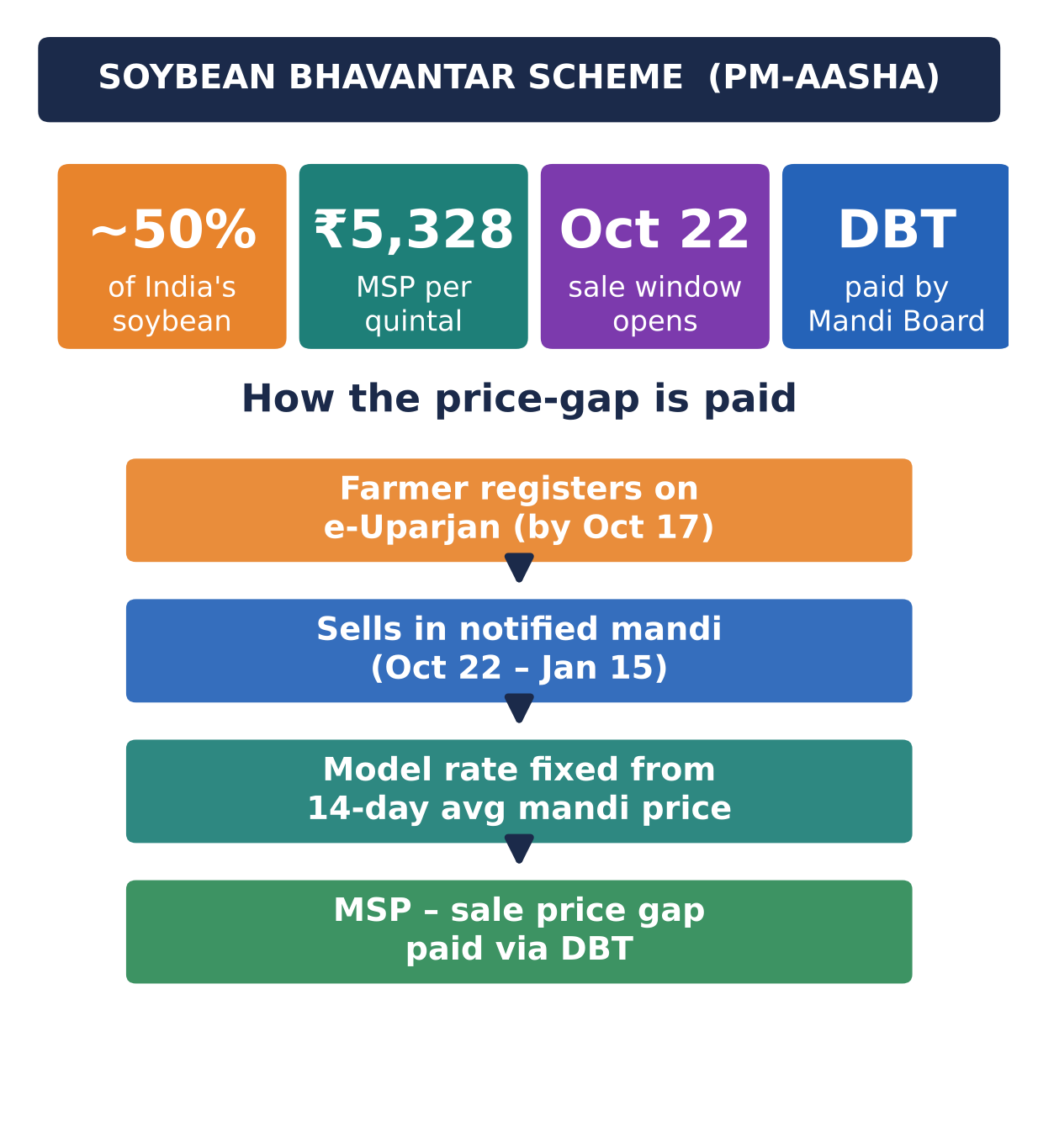
ContextMadhya Pradesh — which grows nearly 50% of India's soybean — has reintroduced the Bhavantar Bhugtan (price-deficiency) scheme for Kharif 2026, with the eligible mandi sale period running 22 October 2026 to 15 January 2027.
Key facts
  • Operates under the Price Deficiency Payment Scheme (PDPS) of the central umbrella scheme PM-AASHA.
  • Soybean MSP is ₹5,328 per quintal; farmers registered on the e-Uparjan portal by 17 October are eligible.
  • Payout = gap between MSP and the sale/model rate, paid by DBT via the Mandi Board from the Price Stabilisation Fund.
  • The model rate is the 14-day weighted average of mandi prices, published daily on the e-Mandi portal.
Way forwardTimely DBT and transparent model-rate fixing can shield farmers from distress sales without the storage burden of open-ended procurement.
ConceptMSP is recommended by the CACP; Bhavantar pays the price gap instead of physically buying the crop, unlike open-ended procurement.
Schematic of MP's Soybean Bhavantar scheme: MSP ₹5,328, ~50% soybean share, 22 October sale window and the four-step DBT payment flow.
Schematic of MP's Soybean Bhavantar scheme: MSP ₹5,328, ~50% soybean share, 22 October sale window and the four-step DBT payment flow. — StudyForGS

2. MP Semiconductor Summit 2026 in Indore on 23–24 October

MADHYA PRADESHMPPSC: Prelims + Mains GS-III (Economy & Industry)
Syllabus linkagePrelims: MP Semiconductor Policy 2025, Brilliant Convention Centre. Mains GS-III: industrial growth, investment, electronics manufacturing.
ContextCM Dr Mohan Yadav will inaugurate the MP Semiconductor Summit 2026 at the Brilliant Convention Centre, Indore, on the theme of making the state a semiconductor hub.
Key facts
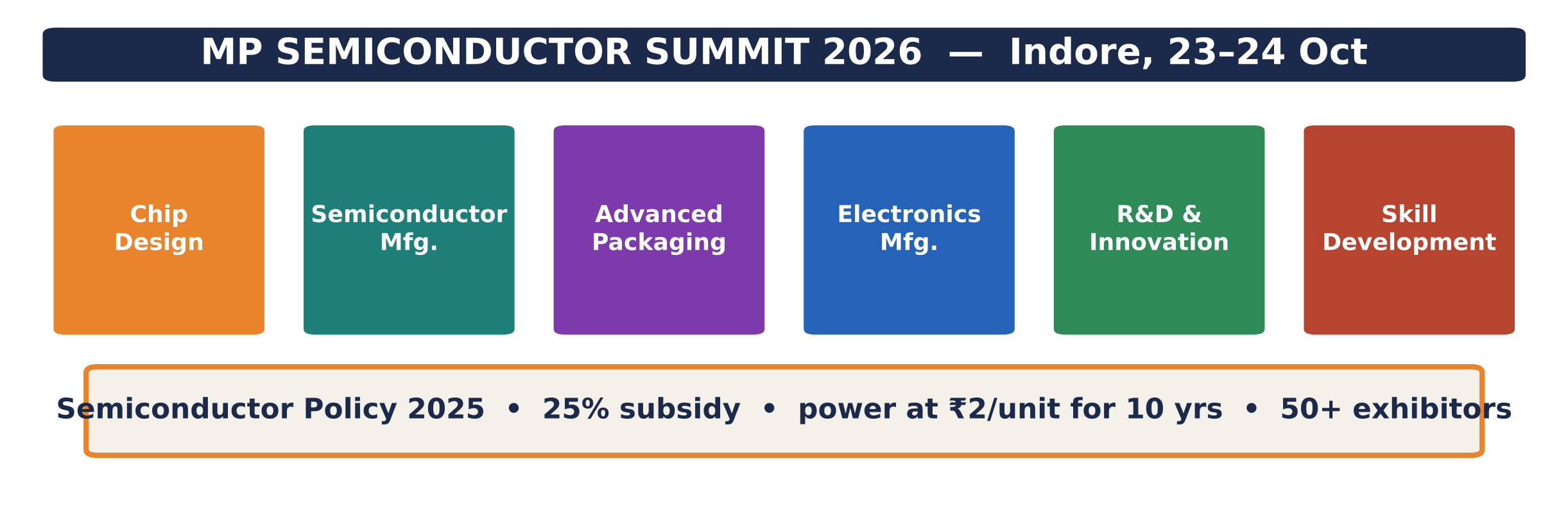
  • 50+ companies to exhibit; the event has 8 panel discussions, 5 roundtables and 2 keynote addresses.
  • Themes: chip design, semiconductor manufacturing, advanced packaging & testing, electronics manufacturing, R&D and skilling.
  • The MP Semiconductor Policy 2025 offers a reported 25% subsidy and power at ₹2 per unit for 10 years.
  • Winners of the MP Semicon Startup Competition final will be felicitated at the closing session.
Way forwardLinking the policy to skilling and anchor investors can help MP compete with Gujarat and Assam in the chip value chain.
ConceptIndia's Semiconductor Mission (ISM) and the DLI scheme aim to build a domestic chip ecosystem; states add their own incentives.
Pillar diagram of MP Semiconductor Summit 2026 themes and the Semiconductor Policy 2025 incentives.
Pillar diagram of MP Semiconductor Summit 2026 themes and the Semiconductor Policy 2025 incentives. — StudyForGS

3. MP Cabinet clears ₹27,050 crore package, Jabalpur–Indore corridor

MADHYA PRADESHMPPSC: Prelims + Mains GS-II/III (Governance & Economy)
Syllabus linkagePrelims: Jabalpur–Indore Economic Corridor SPV, Sandipani schools. Mains: state planning, tribal welfare, infrastructure financing.
ContextThe state cabinet approved projects worth about ₹27,050 crore and a new Jabalpur–Indore Economic Corridor Development Company to drive industrial and social infrastructure along the route.
Key facts
  • The corridor SPV is fully government-owned with ₹100 crore initial paid-up capital for land pooling, parks, GCCs and logistics hubs.
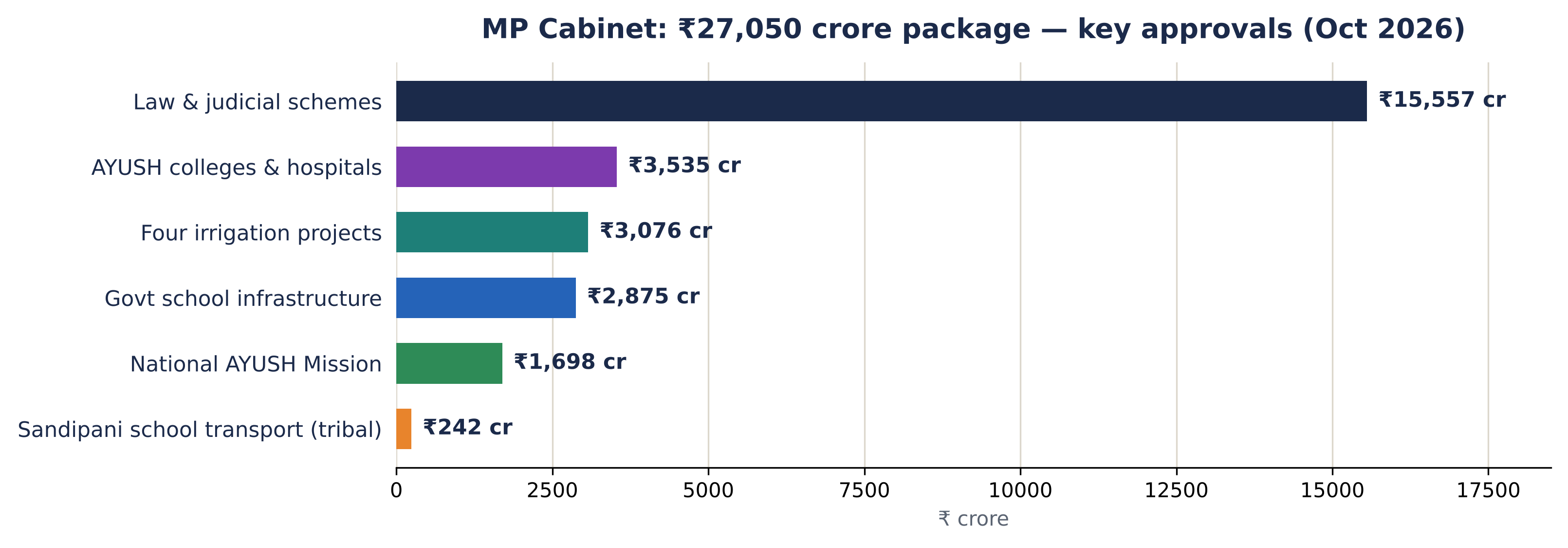
  • ₹15,557 cr for law & judicial schemes; ₹3,076 cr for four irrigation projects; ₹2,875 cr for school infrastructure.
  • ₹241.88 cr for Sandipani school transport (Tribal Affairs Dept): per-student aid up from ₹10,000 to ₹21,000.
  • AYUSH gets ₹3,535 cr (colleges & hospitals) plus ₹1,697 cr (National AYUSH Mission).
Way forwardAn SPV-led corridor can speed land assembly, but compensatory afforestation and transparent allocation will decide its credibility.
ConceptA Special Purpose Vehicle (SPV) is a dedicated company for a project; the corridor also acts as an Investment Region Agency under MP's 2013 Act.
Horizontal bar chart of the MP Cabinet's ₹27,050 crore allocations by head.
Horizontal bar chart of the MP Cabinet's ₹27,050 crore allocations by head. — StudyForGS

4. Ladli Behna: 41st instalment of ₹1,500 to 1.25 crore women

MADHYA PRADESHMPPSC: Prelims + Mains GS-II (Governance & Social Justice)
Syllabus linkagePrelims: Mukhyamantri Ladli Behna Yojana, DBT. Mains GS-II: women empowerment, direct-benefit welfare, state finances.
ContextCM Mohan Yadav released the 41st instalment of the Mukhyamantri Ladli Behna Yojana at Umaria on 14 October 2026, crediting women's accounts by DBT.
Key facts
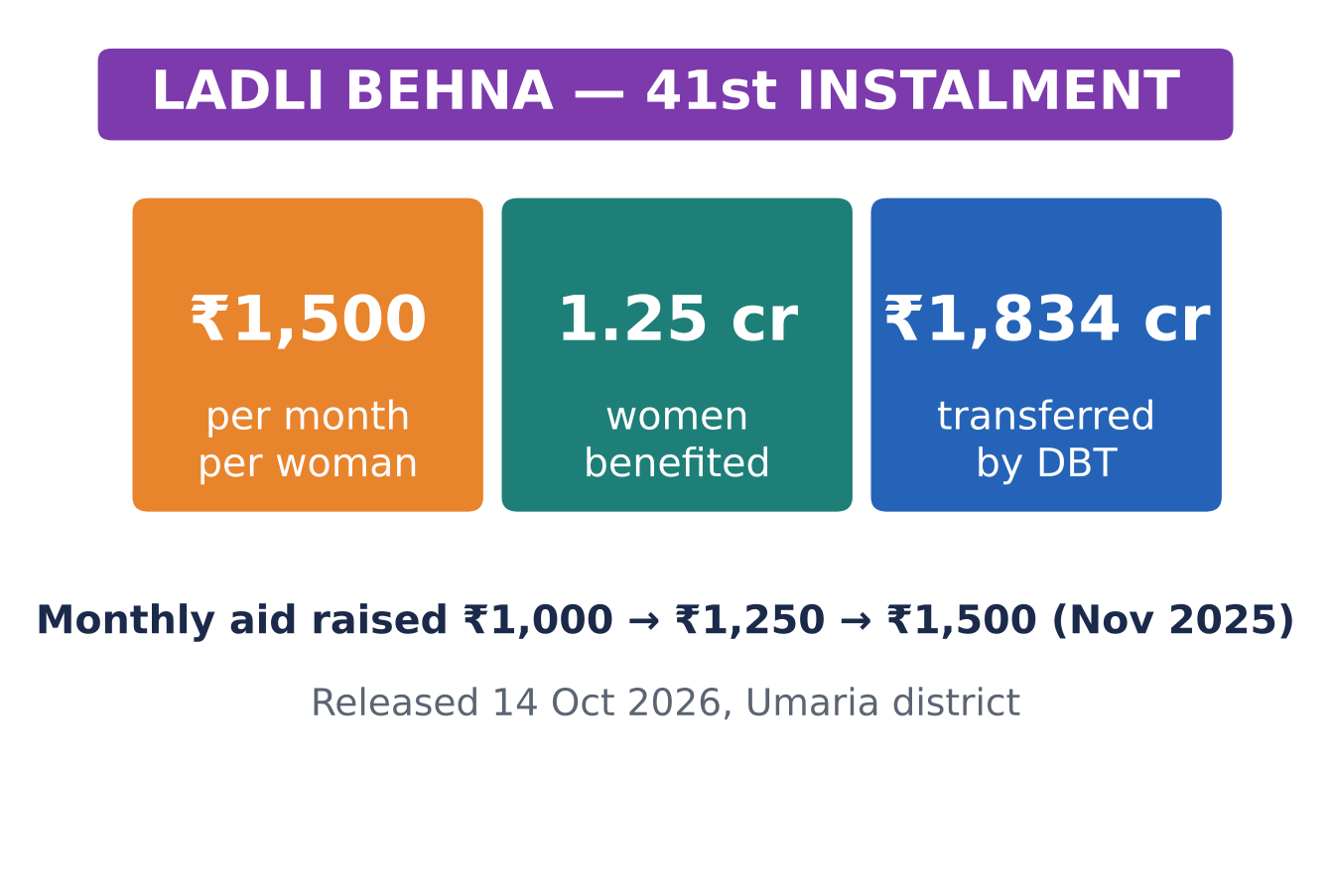
  • ₹1,500 per month transferred to about 1.25 crore women, totalling over ₹1,834 crore.
  • The monthly aid has risen from ₹1,000 → ₹1,250 → ₹1,500 (since November 2025).
  • Pension-receiving beneficiaries get a ₹900 top-up under the scheme's rules.
  • Payments go directly via DBT, cutting leakages and middlemen.
Way forwardSustaining the payout while funding capital projects tests MP's fiscal space; outcome audits can gauge real empowerment.
ConceptDBT routes cash straight to Aadhaar-linked accounts; Ladli Behna is a flagship unconditional cash transfer for women.
Stat tiles for the Ladli Behna 41st instalment: ₹1,500 per month, 1.25 crore women and ₹1,834 crore.
Stat tiles for the Ladli Behna 41st instalment: ₹1,500 per month, 1.25 crore women and ₹1,834 crore. — StudyForGS

5. Peacock conservation project and food park announced in Ujjain

MADHYA PRADESHMPPSC: Prelims + Mains GS-III (Environment & Agriculture)
Syllabus linkagePrelims: national bird, Maa Chamunda Dham, Simhastha 2028. Mains GS-III: biodiversity, food processing, rural livelihoods.
ContextAt Maa Chamunda Dham, Gajni Khedi (Ujjain), the CM launched works worth ₹22.34 crore and announced a peacock conservation project and a food processing park at Badnagar.
Key facts
  • New potato processing units in Ujjain and Agar will buy from farmers across 35 districts.
  • A project will conserve and rehabilitate the peacock, India's national bird.
  • About ₹25,000 crore of works are underway for Simhastha 2028 in Ujjain.
  • Mukhyamantri Sugam Bus Seva was relaunched; a ₹25,000 incentive is offered for taking road-accident victims to hospital.
Way forwardPairing agro-processing with conservation can lift farm incomes while protecting the state's biodiversity.
ConceptThe Indian peacock is protected under Schedule I of the Wild Life (Protection) Act, 1972; food parks add value near production clusters.

6. Project Cheetah: India's cheetah count reaches 60

ENVIRONMENTMPPSC: Prelims + Mains GS-III (Environment & Ecology)
Syllabus linkagePrelims: Kuno NP, Gandhi Sagar, Project Cheetah, source countries. Mains GS-III: species reintroduction, habitat management.
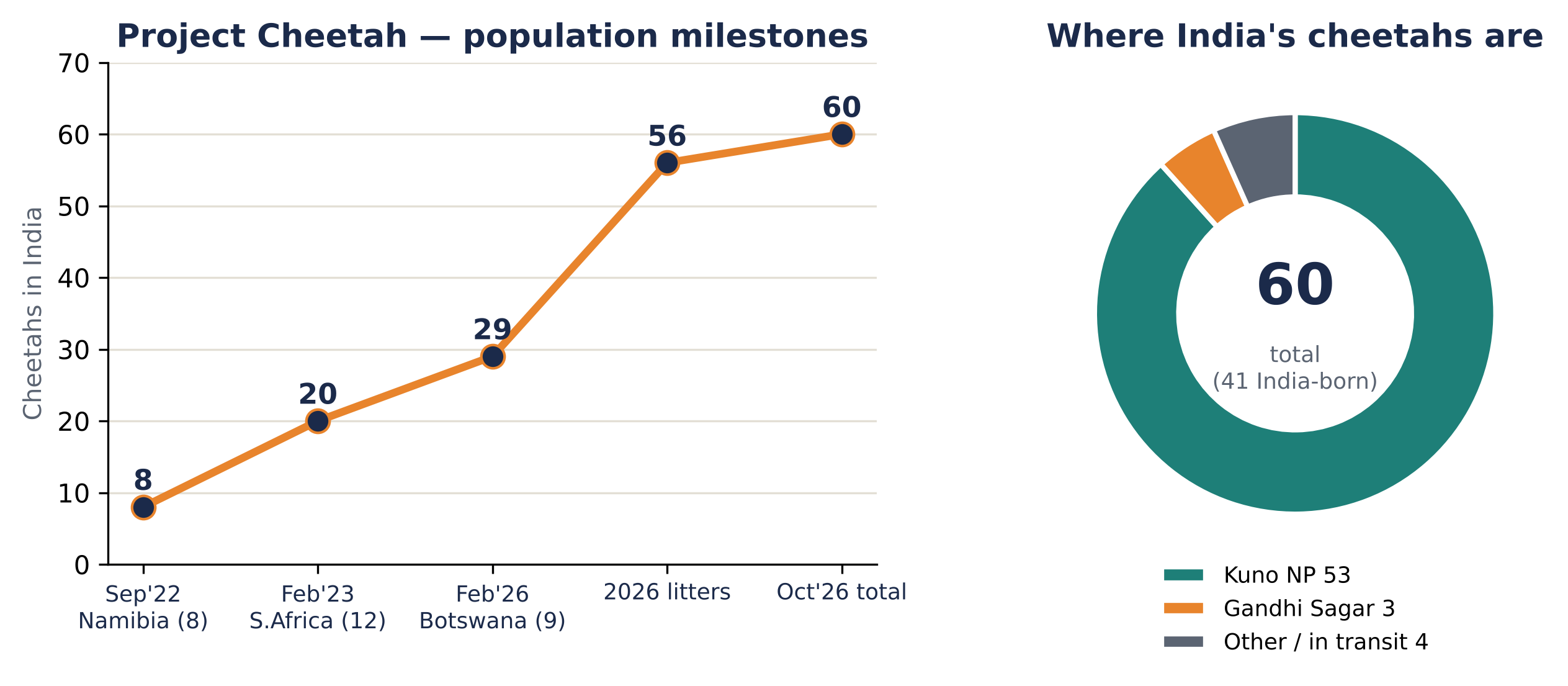
ContextWith a fresh litter at Kuno National Park in early October, India's cheetah population has climbed to 60, of which 41 were born on Indian soil.
Key facts
  • Kuno (MP) holds about 53 cheetahs; Gandhi Sagar Wildlife Sanctuary is being developed as the second home.
  • The project began on 17 September 2022 with 8 from Namibia; 12 from South Africa (2023) and 9 from Botswana (2026) followed.
  • The latest birth introduced the Botswanan genetic lineage, widening the founder gene pool.
  • India is the only country attempting inter-continental cheetah reintroduction.
Way forwardA viable metapopulation needs more habitats, prey augmentation and wildlife corridors beyond Kuno.
ConceptThe cheetah is the world's fastest land animal; it was declared extinct in India in 1952 before this reintroduction.
Line chart of Project Cheetah population milestones and a donut of where India's 60 cheetahs live.
Line chart of Project Cheetah population milestones and a donut of where India's 60 cheetahs live. — StudyForGS

7. State Spotlight: Madhya Pradesh — India's Tiger & Wildlife State

MADHYA PRADESHMPPSC: Prelims + Mains GS-I/III (Geography & Environment)
Syllabus linkagePrelims: tiger reserves, national parks, forest-cover rank. Mains: conservation, eco-tourism, forest economy.
ContextAs cheetah numbers rise, revise MP's standing as India's foremost wildlife state — a recurring MPPSC theme across both prelims and mains.
Key facts
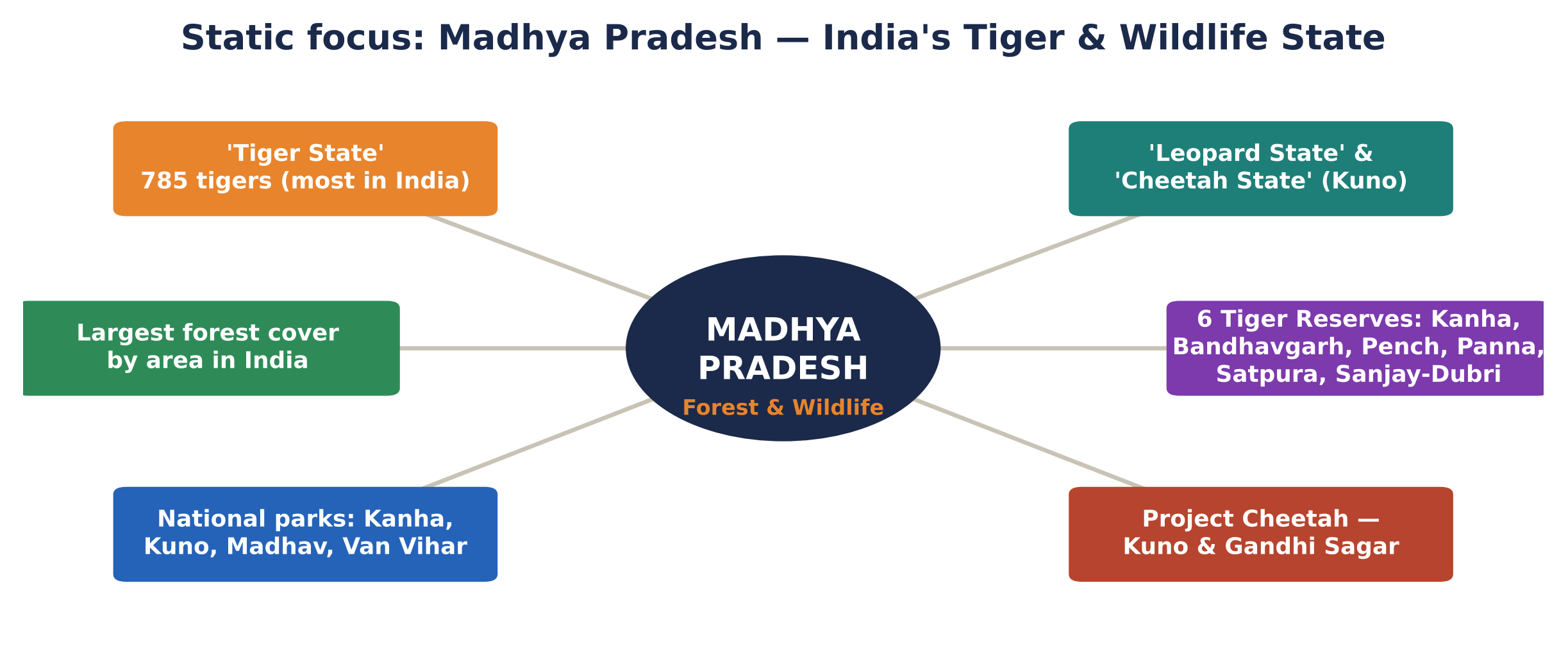
  • MP is the 'Tiger State' with the most tigers in India (785, 2022 estimate) and the largest forest cover by area.
  • Six tiger reserves: Kanha, Bandhavgarh, Pench, Panna, Satpura, Sanjay-Dubri.
  • It is also tagged the 'Leopard State' and now a 'Cheetah State' via Kuno & Gandhi Sagar.
  • Key national parks: Kanha, Kuno, Madhav, Van Vihar, Satpura.
Way forwardBalancing tiger-tourism revenue with core-zone protection and tribal rights remains the governance challenge.
ConceptTiger reserves are notified under the Wild Life (Protection) Act and managed by the NTCA under Project Tiger (1973).
Mind-map of Madhya Pradesh's wildlife profile: Tiger State, forest cover, tiger reserves, national parks and Project Cheetah.
Mind-map of Madhya Pradesh's wildlife profile: Tiger State, forest cover, tiger reserves, national parks and Project Cheetah. — StudyForGS

8. PLFS 2025: Female labour force participation jumps

REPORTMPPSC: Prelims + Mains GS-III/II (Economy & Society)
Syllabus linkagePrelims: PLFS, FLFPR, NSO, MoSPI. Mains: women in the workforce, employment data, gender and economy.
ContextThe latest Periodic Labour Force Survey (PLFS) shows a sharp rise in the Female Labour Force Participation Rate (FLFPR) between 2019–20 and 2025.
Key facts
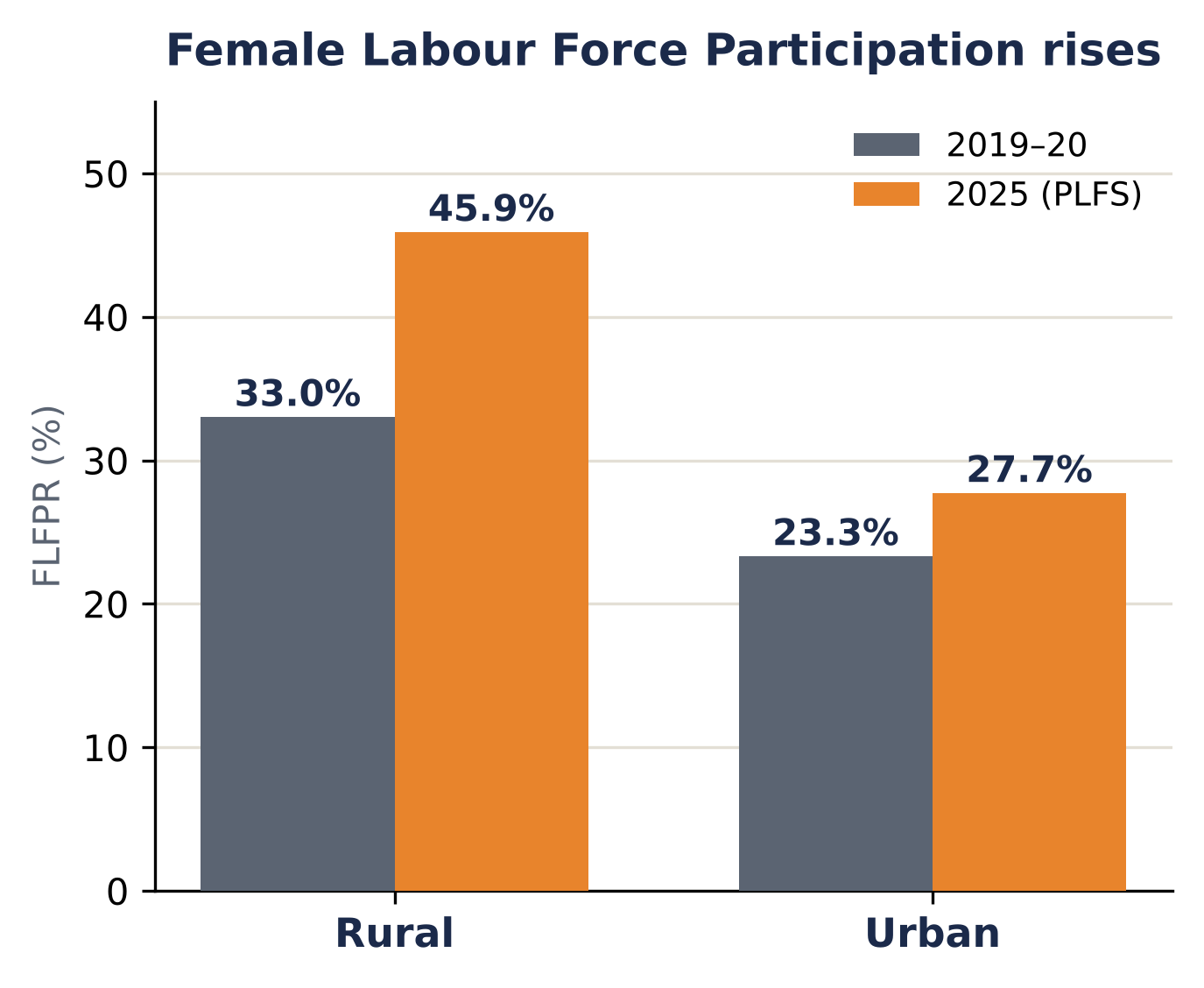
  • Rural FLFPR rose from 33% to 45.9%; urban from 23.3% to 27.7%.
  • Arunachal Pradesh recorded the highest annual rise among the NE states/UTs studied.
  • Lakshadweep recorded the largest rural decline.
  • PLFS is released by the NSO under the MoSPI.
Way forwardTranslating higher participation into quality, paid jobs and closing the wage gap is the next policy frontier.
ConceptFLFPR is the share of working-age women who are working or seeking work — a key gender-and-growth indicator.
Grouped bar chart of rural and urban female labour force participation in 2019–20 versus 2025.
Grouped bar chart of rural and urban female labour force participation in 2019–20 versus 2025. — StudyForGS

9. CJI cites separation of powers on CEC complaint

POLITYMPPSC: Prelims + Mains GS-II (Polity & Governance)
Syllabus linkagePrelims: separation of powers, basic structure, ECI. Mains GS-II: judiciary–executive relations, electoral administration.
ContextCJI Surya Kant declined a request by opposition leaders to take up allegations against the CEC over the Special Intensive Revision (SIR) of electoral rolls, citing separation of powers and judicial propriety as the matter is sub judice.
Key facts
  • Separation of powers divides functions among the legislature, executive and judiciary and is part of the Constitution's basic structure.
  • Judicial conduct norms draw on the Bangalore Principles of Judicial Conduct.
  • The Election Commission conducts the SIR to clean up and update electoral rolls.
  • Matters that are sub judice are generally not taken up administratively.
Way forwardInstitutional restraint preserves the credibility of both the judiciary and the poll body ahead of elections.
ConceptThe basic structure doctrine (Kesavananda Bharati, 1973) bars amendments that damage the Constitution's core, including separation of powers.

10. Exercise AUSTRAHIND 2026 begins in Thiruvananthapuram

DEFENCEMPPSC: Prelims + Mains GS-III (Security & Defence)
Syllabus linkagePrelims: AUSTRAHIND, India's bilateral exercises. Mains GS-III: defence diplomacy, Indo-Pacific cooperation.
ContextThe 5th edition of the India–Australia joint military exercise AUSTRAHIND began on 19 October 2026 and runs to 1 November 2026.
Key facts
  • Held at the Foreign Training Node, Thiruvananthapuram (Kerala).
  • About 120 personnel from each army are taking part.
  • Focus on sub-conventional operations in semi-urban and jungle terrain under a UN mandate.
  • Part of India's deepening defence ties with Australia in the Indo-Pacific.
Way forwardRegular joint drills build interoperability and signal convergence on a free, open Indo-Pacific.
ConceptBilateral exercises enhance interoperability; India also holds Malabar and Pitch Black with Australia and partners.

11. ICAR highlights biofortified purple potato 'Kufri Jamunia'

SCI-TECHMPPSC: Prelims + Mains GS-III (Science-Tech & Agriculture)
Syllabus linkagePrelims: ICAR-CPRI, biofortification, anthocyanins. Mains GS-III: agricultural research, nutrition security.
ContextICAR-CPRI has highlighted Kufri Jamunia, a purple-skinned, purple-fleshed potato rich in micronutrients, to help tackle hidden hunger.
Key facts
  • Released in 2024; rich in vitamin C, anthocyanins, carotenoids, iron and zinc.
  • Earlier coloured varieties: Kufri Neelkanth (2018) and Kufri Manik (2021).
  • Developed by the Central Potato Research Institute (CPRI), Shimla.
  • Biofortification breeds higher nutrient content into staple crops.
Way forwardScaling biofortified staples can cheaply improve dietary micronutrients across India.
ConceptHidden hunger is micronutrient deficiency despite adequate calories; anthocyanins are antioxidant plant pigments.

Data point of the day

₹5,328 / quintal
Soybean MSP & MP's share
Minimum Support Price for soybean this season. Madhya Pradesh grows nearly 50% of India's soybean, and its Bhavantar sale window opens 22 October 2026.

Prelims rapid-fire

MP is India's 'Tiger State' with 785 tigers (2022) — the most of any state.
Soybean MSP is ₹5,328 per quintal; MP grows ~50% of India's soybean.
Kuno National Park & Gandhi Sagar Sanctuary host Project Cheetah in MP.
PM-AASHA's PDPS pays the gap between MSP and market price.
PLFS is released by the NSO under MoSPI.
AUSTRAHIND is the India–Australia joint army exercise.

Practice MCQs — MPPSC Prelims pattern

Q1. With reference to the Soybean Bhavantar scheme, which one of the following is NOT correct?

  1. It operates under PM-AASHA's Price Deficiency Payment Scheme (PDPS).
  2. The price gap is paid to registered farmers through DBT.
  3. The government procures and stores the farmer's entire soybean crop.
  4. The reference soybean MSP is ₹5,328 per quintal.
Show answer
Answer: C
Bhavantar (PDPS) pays farmers the difference between the MSP and the sale/model rate via DBT; it does NOT physically procure or store the crop. The other three are correct.

Q2. Consider the following about Project Cheetah: 1. Kuno National Park is in Madhya Pradesh. 2. The first cheetahs were brought from Namibia in 2022. 3. Gandhi Sagar is being developed as a second cheetah habitat. Which of the above are correct?

  1. 1 and 2 only
  2. 2 and 3 only
  3. 1 and 3 only
  4. 1, 2 and 3
Show answer
Answer: D
All three are correct — Kuno is in MP, the first 8 cheetahs arrived from Namibia in September 2022, and Gandhi Sagar Wildlife Sanctuary is the planned second home.

Mains practice question

Q. Madhya Pradesh is branding itself at once as an agrarian powerhouse and an emerging industrial and conservation hub. Examine this with reference to the Soybean Bhavantar scheme, the Semiconductor Summit and Project Cheetah. (250 words)

Hint / approach
Link farm price support (Bhavantar/PDPS) to farmer welfare, the Semiconductor Policy 2025 to investment-led growth, and cheetah reintroduction to conservation and eco-tourism; weigh the fiscal and ecological trade-offs.
📌 One-line revision: Lock it in: Soybean Bhavantar window opens 22 Oct (MSP ₹5,328) · Semiconductor Summit Indore 23–24 Oct · MP Cabinet ₹27,050 cr · Ladli Behna 41st (₹1,500) · Cheetahs touch 60 · PLFS rural FLFPR 45.9%.
← 20 October 2026All MPPSC current affairs2 November 2026 →

Preparing for Madhya Pradesh PSC (MPPSC)?

Practice with free MPPSC GK MCQs, track every micro-topic of your syllabus, and get the full PDF digest on Telegram every day.

Current affairs for other exams — 21 October 2026