Monday, 19 October 2026 · IST · Madhya Pradesh + National · 12 items · 2 MCQs
The Madhya Pradesh Cabinet approved a Rs 27,050 crore development package including the Soybean Bhavantar (Price Deficiency) Scheme and a special company for the Jabalpur-Indore Economic Corridor. Two cheetahs were released in Veerangana Durgavati Tiger Reserve, India's third cheetah home, taking the national count to 60. Nationally, retail inflation rose to 5.54% in September, prompting the RBI's first repo-rate hike since 2023 to 5.50%.
MP state economy, cabinet decisions, public finance; Prelims: MP schemes & budgetary outlays
Context
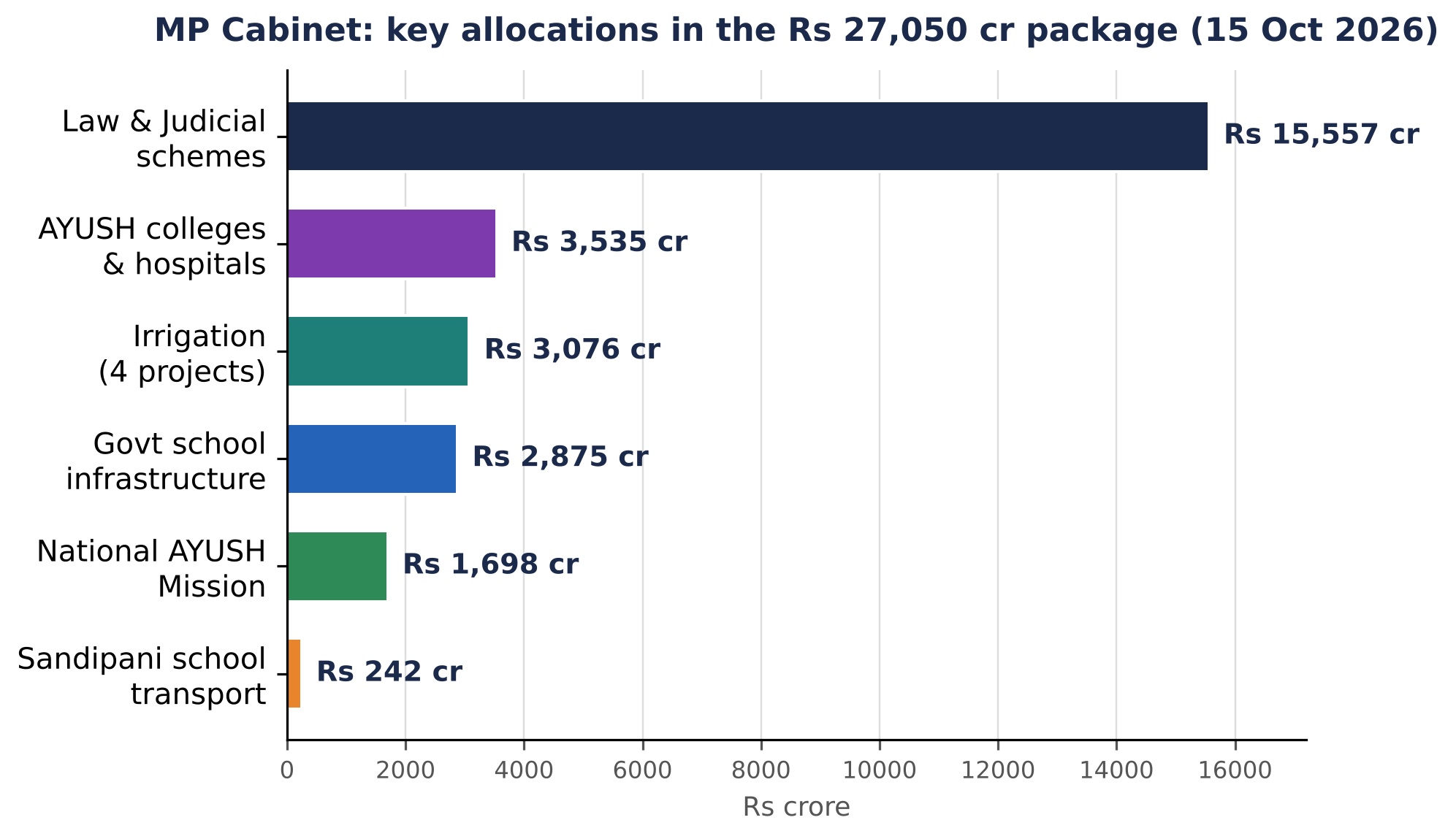
The Madhya Pradesh Cabinet, chaired by CM Dr Mohan Yadav, on 15 Oct 2026 cleared proposals worth about Rs 27,050 crore spanning irrigation, AYUSH, education, justice and industry.
Key facts
Law & judicial schemes: Rs 15,557 crore (2026-31), incl. Rs 12,252 cr for judicial salaries
Agricultural marketing, MSP, PM-AASHA; Prelims: MP as 'Soybean State', PDPS vs price support
Context
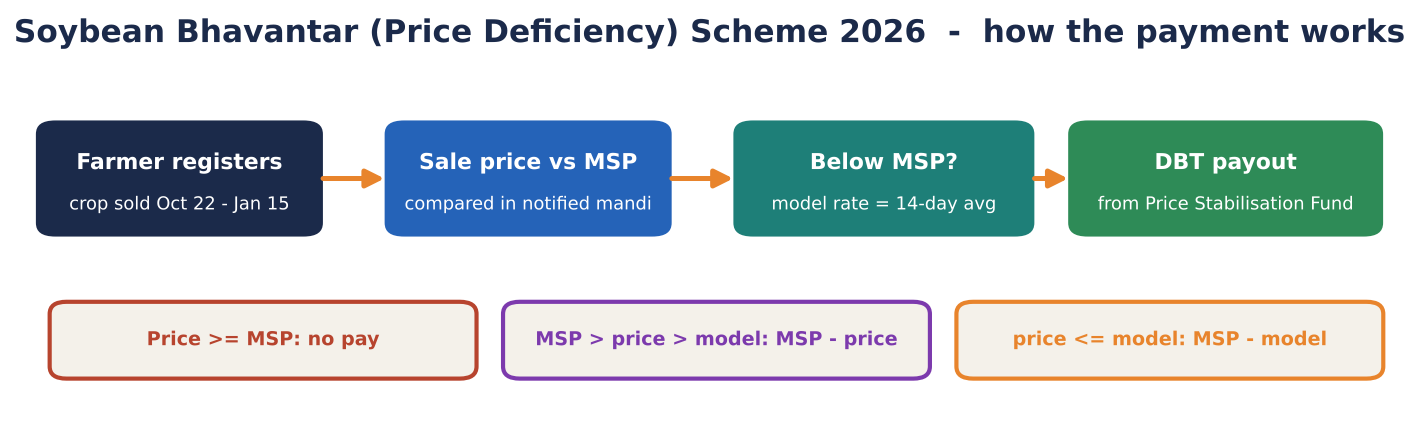
The Cabinet approved the Soybean Bhavantar Yojana to pay farmers the gap when market prices fall below MSP, reviving the price-deficiency model for the 'Soybean State'.
Key facts
Follows Price Deficiency Payment Scheme (PDPS) under PM-AASHA
Registration via e-Uparjan portal; eligible sale window 22 Oct 2026 - 15 Jan 2027
Model rate = weighted 14-day average of mandi prices; recalculated daily
Gap paid by DBT through the Mandi Board from the Price Stabilisation Fund
Way forward
PDPS shields farmers without physical procurement, but accurate model-rate computation and timely DBT are key to preventing distress sales.
Concept
MSP = minimum support price announced on CACP advice; PM-AASHA bundles PSS, PDPS and private procurement to assure farmers remunerative prices.
Flowchart of the Soybean Bhavantar scheme: registration, MSP comparison, model-rate test and DBT payout, with the three payout rules. — StudyForGS
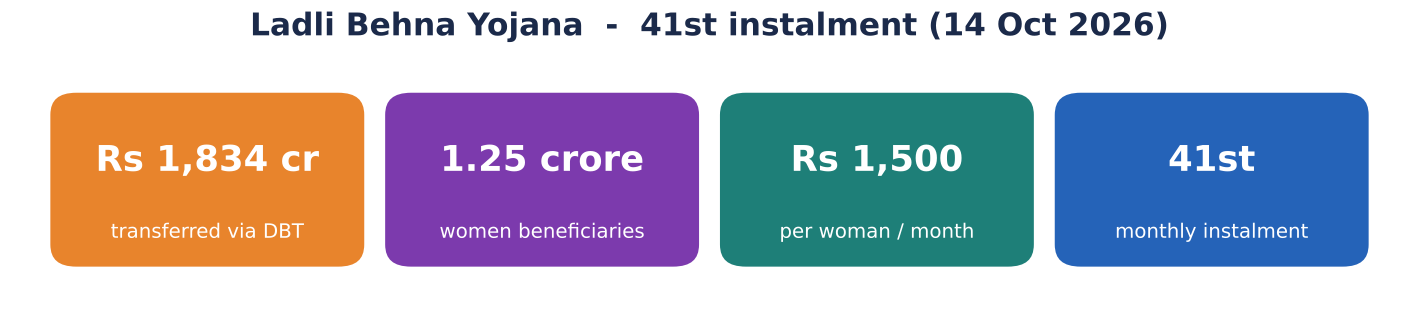
3. Ladli Behna: 41st instalment of Rs 1,834 crore transferred
Wildlife conservation, Project Cheetah, protected areas of MP; Prelims: tiger/cheetah reserves
Context
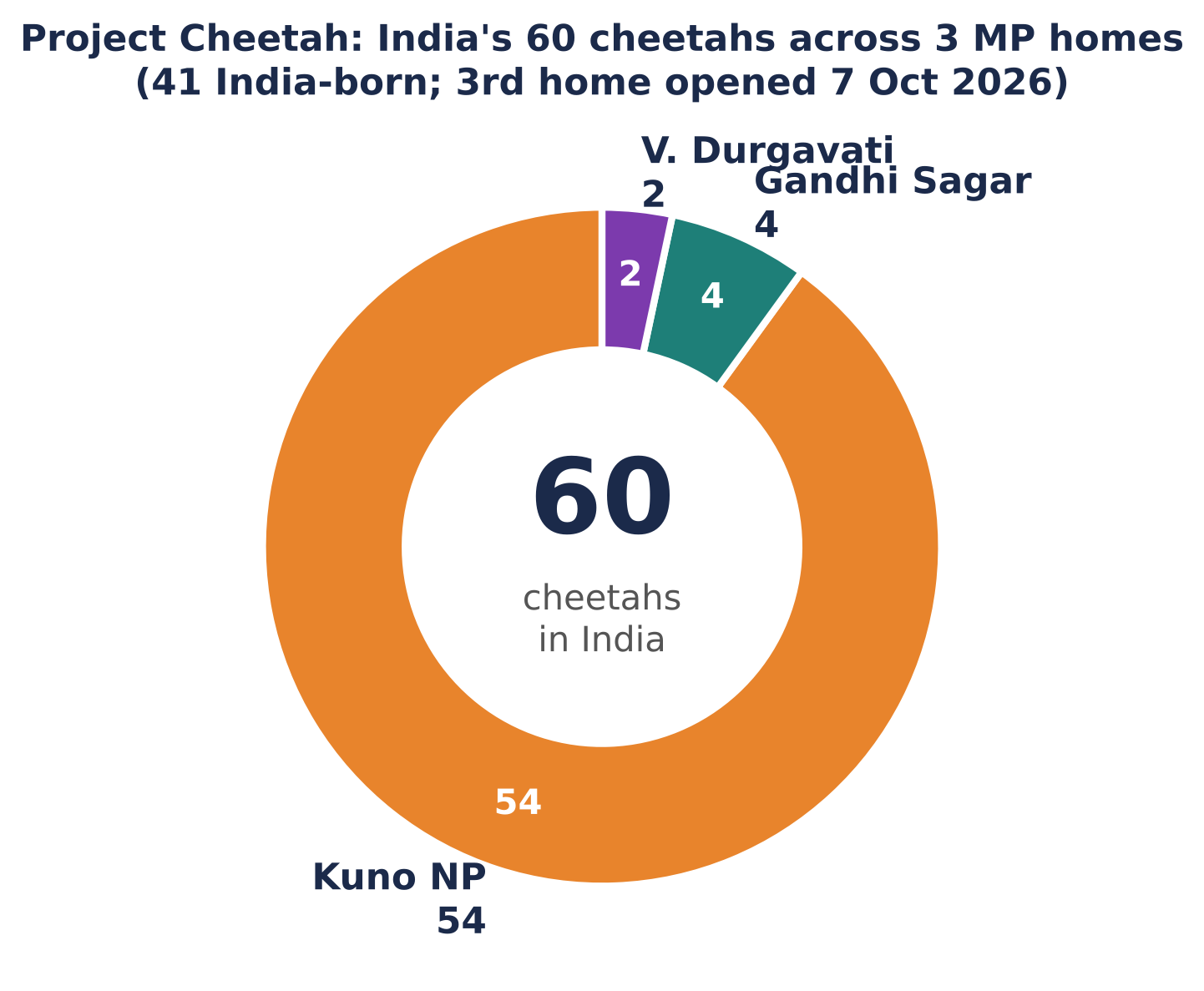
Two cheetahs were released in the Veerangana Durgavati (Nauradehi) Tiger Reserve on 7 Oct 2026, making it Madhya Pradesh's third cheetah home after Kuno and Gandhi Sagar.
Key facts
India's cheetah population now 60, of which 41 were born in India
Distribution: Kuno 54, Gandhi Sagar 4, V. Durgavati 2
V. Durgavati spans Sagar, Damoh & Narsinghpur; MP's largest tiger reserve (~2,339 sq km)
Project Cheetah began 17 Sept 2022 with Namibian cheetahs at Kuno
Way forward
Spreading cheetahs across landscapes reduces single-site risk, but prey density, water and health monitoring remain decisive for survival.
Concept
India is the only country reintroducing a large carnivore across continents; MP is the 'Tiger State' and now the 'Cheetah State'.
Donut chart showing India's 60 cheetahs split across Kuno (54), Gandhi Sagar (4) and Veerangana Durgavati (2). — StudyForGS
5. Ujjain gears up for Simhastha Kumbh 2028 with Rs 25,000 cr plan
Agro-processing, edible oil value chain, MP agri-industry; Prelims: Indore, soybean belt
Context
A two-day International Soya Conclave was held in Indore on 16-17 Oct 2026, bringing the soybean and edible-oil industry together across the value chain.
Key facts
Covered procurement, processing, oil extraction and trade
Indore is the hub of the Malwa soybean belt
MP is a leading soybean producer, central to India's edible-oil self-reliance
Supports the national push to cut edible-oil imports
Way forward
Value-addition in soy processing and oil extraction can raise farm incomes and trim the edible-oil import bill if backed by stable prices.
Concept
Soybean is an oilseed and protein-meal crop; India runs a large edible-oil import dependency that missions aim to reduce.
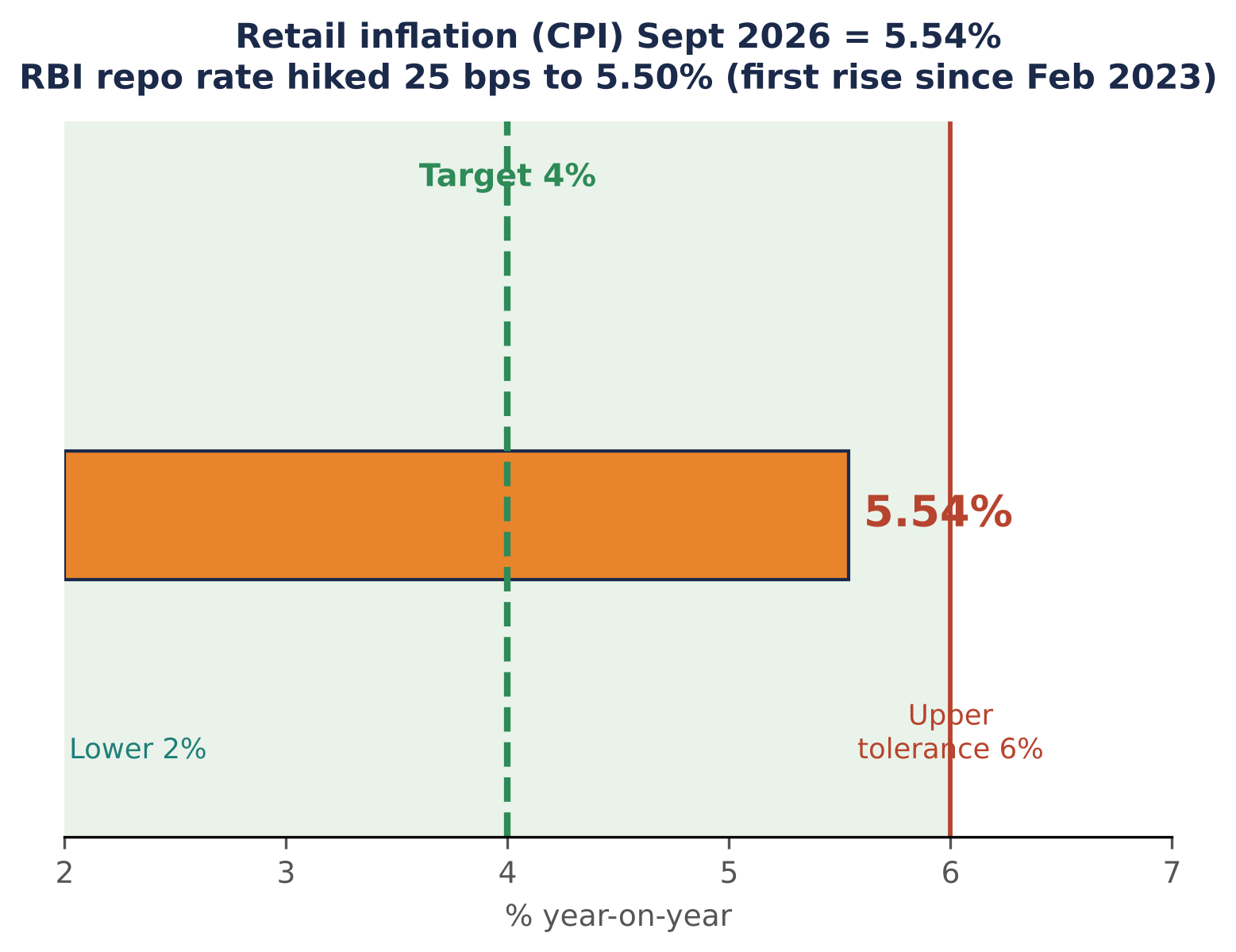
7. RBI hikes repo rate to 5.50% as September CPI inflation hits 5.54%
The national cyber agency CERT-In warned that rogue AI agents have targeted Indian firms and accessed sensitive data, highlighting AI-era cyber risks.
Key facts
Autonomous AI agents used to breach and exfiltrate sensitive data
CERT-In is India's nodal cyber-incident response agency
Signals a shift to AI-automated cyberattacks
Reinforces need for stronger cyber hygiene and audits
Way forward
Firms need AI-aware threat detection, zero-trust architecture and prompt incident reporting to CERT-In.
Concept
CERT-In (under MeitY) is the national agency for responding to cybersecurity incidents under the IT Act framework.
Data point of the day
size of the MP Cabinet's single-day development package (15 Oct 2026)
Rs 27,050 crore Largest allocations: Law & Judicial schemes Rs 15,557 cr; AYUSH colleges Rs 3,535 cr; four irrigation projects Rs 3,076 cr.
Prelims rapid-fire
Soybean State of India: Madhya Pradesh (Malwa plateau belt).
MP's third cheetah home: Veerangana Durgavati (Nauradehi) Tiger Reserve.
RBI inflation target: 4% (+/- 2%) under flexible inflation targeting.
PM-AASHA umbrella includes PSS, PDPS and private procurement.
Mahakaleshwar at Ujjain is one of India's 12 Jyotirlingas.
CERT-In is India's nodal cyber-incident response agency (MeitY).
Practice MCQs — MPPSC Prelims pattern
Q1. With reference to the Soybean Bhavantar Yojana recently approved in Madhya Pradesh, consider the following:
1. It is modelled on the Price Deficiency Payment Scheme (PDPS) under PM-AASHA.
2. It involves physical procurement of soybean at MSP by the state.
3. Payments are made through Direct Benefit Transfer.
Which of the statements is/are correct?
1 and 2 only
1 and 3 only
2 and 3 only
1, 2 and 3
Show answer
Answer: B The scheme follows PDPS under PM-AASHA (1 correct) and pays the price gap via DBT (3 correct). PDPS compensates the price difference rather than physically procuring the crop, so statement 2 is wrong.
Q2. Consider the following about Project Cheetah in Madhya Pradesh:
1. Veerangana Durgavati (Nauradehi) is MP's third cheetah habitat.
2. India's cheetah reintroduction began at Kuno in 2022.
Which of the statements is/are correct?
1 only
2 only
Both 1 and 2
Neither 1 nor 2
Show answer
Answer: C Veerangana Durgavati became the third cheetah home (after Kuno and Gandhi Sagar) in October 2026, and reintroduction began at Kuno in September 2022. Both statements are correct.
Mains practice question
Q. "Price-deficiency payment schemes can protect farmers without the costs of physical procurement." In the light of Madhya Pradesh's Soybean Bhavantar Yojana, examine the merits and limitations of this approach. (15 marks, 250 words)
Hint / approach
Explain PDPS vs PSS; merits (no storage cost, DBT, wider coverage); limitations (model-rate manipulation, price crash below model rate, fiscal burden); link to PM-AASHA and farmer income.
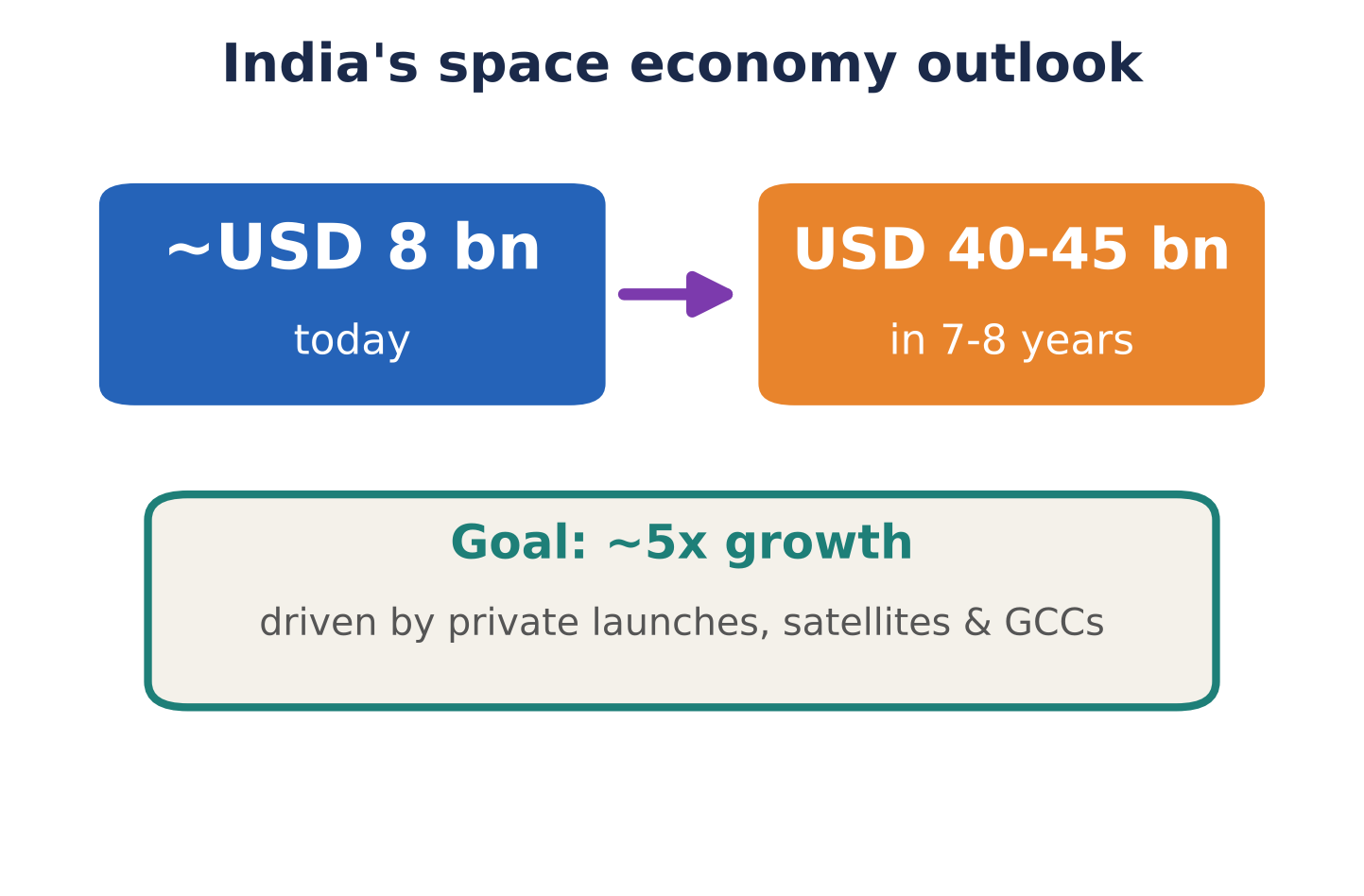
📌 One-line revision: REVISE IN 10 SECONDS: Rs 27,050 cr MP Cabinet pkg * Soybean Bhavantar (PDPS/PM-AASHA, sale 22 Oct-15 Jan) * Ladli Behna 41st: Rs 1,834 cr/1.25 cr women * Cheetahs 60, 3rd home V. Durgavati * CPI 5.54%, RBI repo 5.50% * Space eco USD 40-45 bn.