Tuesday, 8 September 2026 · IST · Bihar + National · 11 items · 2 MCQs
Bihar-first today: Bihar and Jharkhand signed an MoU ending a 25-year Sone (Son) river water dispute (Bihar 5.75 MAF, Jharkhand 2 MAF), the Bihar cabinet cleared an AI Mission, EV Policy and a Rs 15,967 crore road plan, and Gaya geared up for the Pitri Paksha Mela. Nationally, the RBI absorbed about Rs 6 lakh crore of surplus liquidity, India readied the 18th BRICS Summit at Bharat Mandapam, and the DAC cleared Rs 1.10 lakh crore of defence procurement.
Today at a glance — things to remember
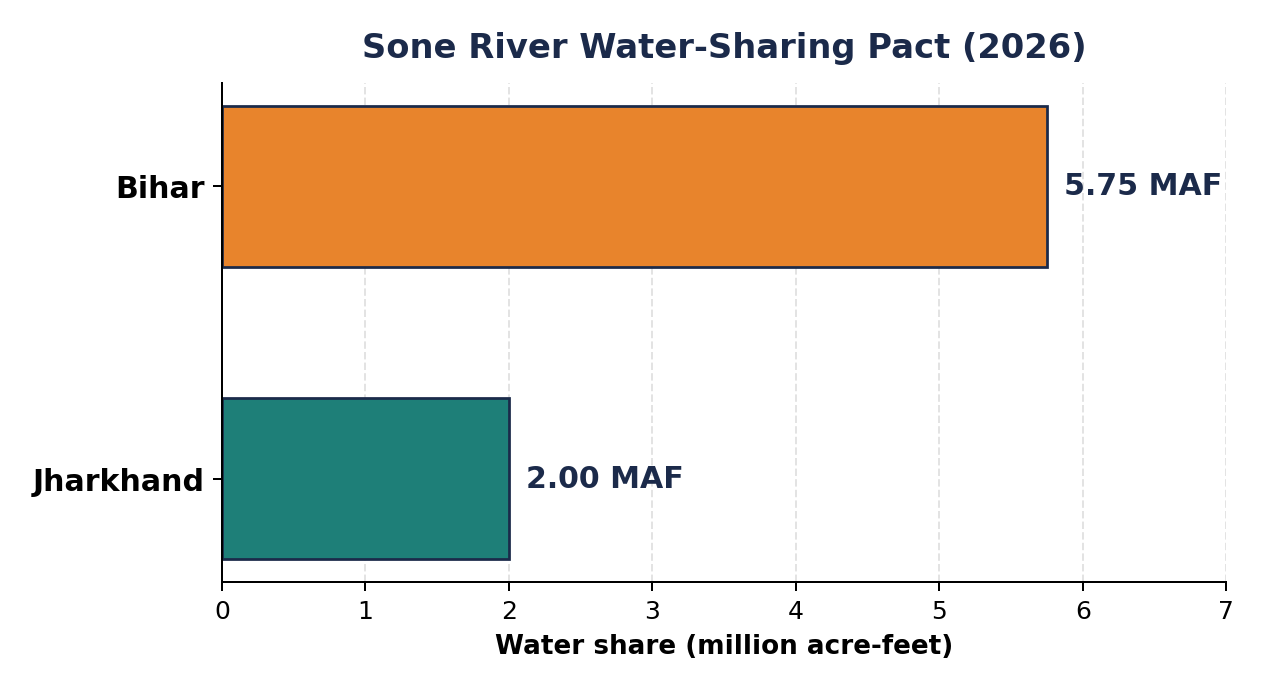
Bihar-Jharkhand sign Sone river water pact: Bihar 5.75 MAF, Jharkhand 2 MAF.
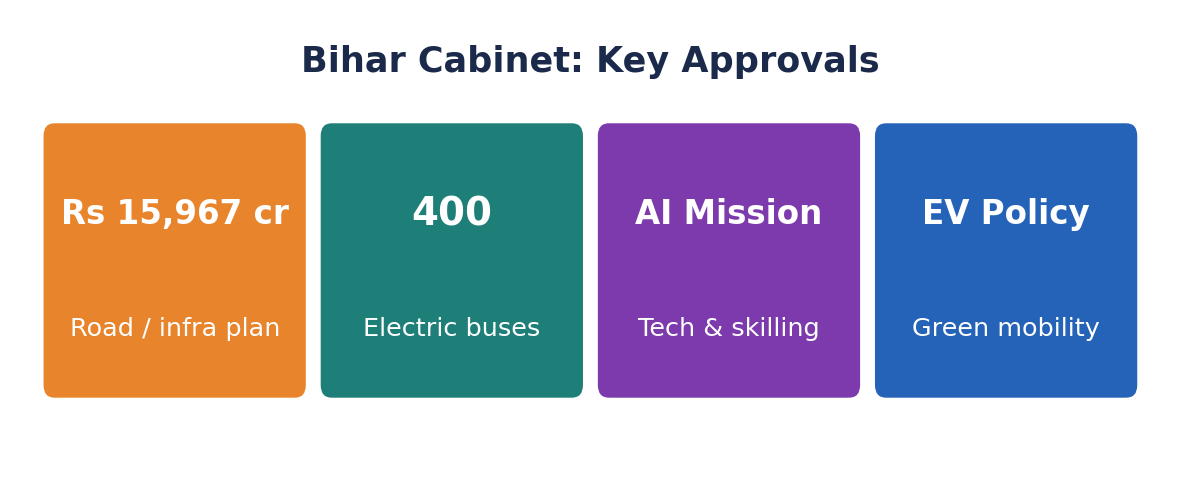
Bihar cabinet clears AI Mission, EV Policy, 400 e-buses, Rs 15,967 cr roads.
Mithila Makhana push: up to Rs 72,750/ha subsidy; national Makhana Board.
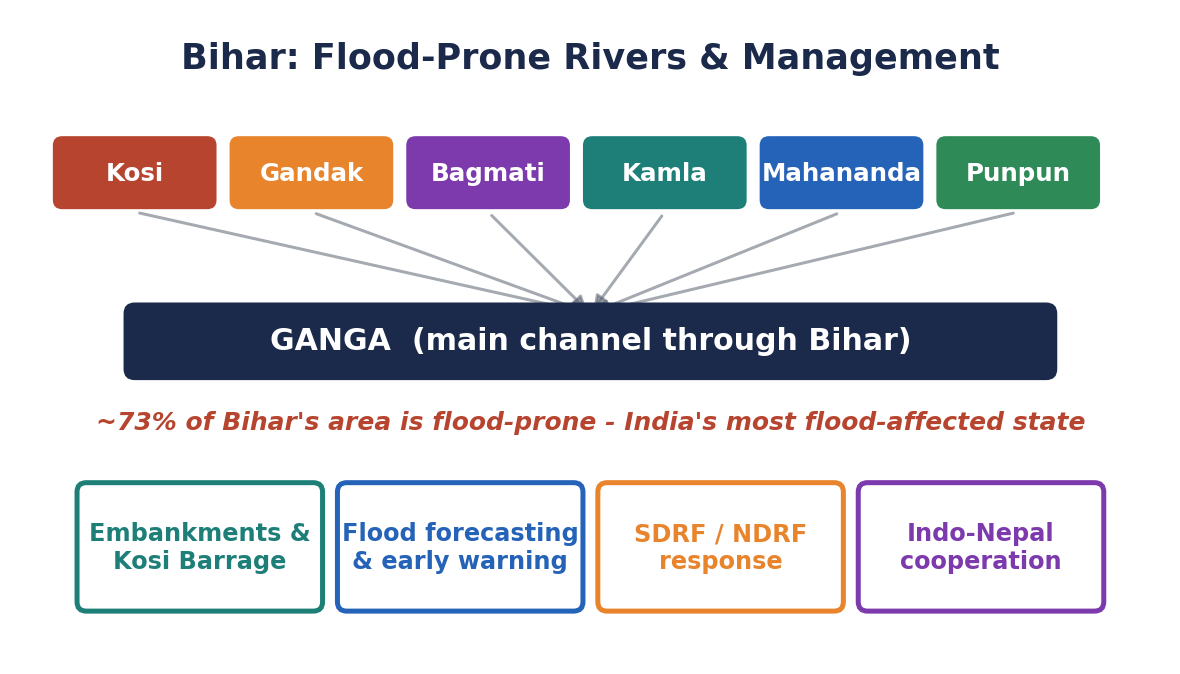
Ganga and Punpun above danger mark; Bihar on flood alert.
GS-II: Indian polity (inter-state relations, Art. 262) and Bihar geography (rivers); Prelims: Sone as a Ganga right-bank tributary, cooperative federalism.
Context
On 31 August 2026 Bihar and Jharkhand signed an MoU ending a 25-year dispute over sharing Sone (Son) river water, one of the Ganga's largest right-bank tributaries.
Key facts
Water shared: Bihar 5.75 MAF (million acre-feet) and Jharkhand 2 MAF.
The Sone rises near Amarkantak (Madhya Pradesh) and joins the Ganga near Patna (Maner).
Indrapuri Barrage at Dehri (on the Sone) is among Asia's longest barrages and anchors the Sone Canal System.
Inter-state water disputes fall under Article 262 and the Inter-State River Water Disputes Act, 1956.
Way forward
Negotiated pacts can pre-empt long tribunals; Bihar should modernise the ageing Sone Canal network to cut transmission losses.
Concept
Right-bank tributaries of the Ganga: Son, Yamuna, Chambal. Article 262 lets Parliament bar courts from notified inter-state water disputes.
Bar chart of Sone river water allocation: Bihar 5.75 MAF versus Jharkhand 2 MAF. — StudyForGS
2. Bihar Cabinet Clears AI Mission, EV Policy & Mega Road Plan
GS-II: Bihar economy (infrastructure, industrial policy) and governance/e-governance; Prelims: state schemes and budgets.
Context
The Nitish Kumar cabinet approved proposals to push infrastructure, clean mobility and technology, including a state AI Mission, an EV Policy and a large road-building plan.
Key facts
Approved a Rs 15,967 crore road/infrastructure plan and induction of 400 electric buses for city transport.
Cleared a Bihar AI Mission and an Electric Vehicle (EV) Policy for green mobility and skilling.
Earlier packages added biogas plants, solar subsidies and a DA hike for state employees.
Backs the goal of one crore jobs under the Bihar Industrial Investment Promotion Policy.
Way forward
Success hinges on charging infrastructure, timely fund release and PPP execution capacity.
Concept
State AI/EV policies operationalise national missions (IndiaAI, PM E-DRIVE/FAME) at the sub-national level.
Stat tiles of Bihar cabinet decisions: Rs 15,967 cr roads, 400 e-buses, AI Mission, EV Policy. — StudyForGS
3. Makhana Development Scheme Boosts Bihar Fox-Nut Farmers
Several rivers including the Ganga and Punpun are flowing above the danger mark, keeping parts of Bihar on flood alert; rail speed on the Jamalpur-Bhagalpur route was cut to 30 km/h.
Key facts
Bihar is India's most flood-prone state; about 73% of its area is flood-affected.
GS-I: Indian culture and Bihar's heritage (pilgrimage, tourism); Prelims: Gaya, Vishnupad, pind-daan.
Context
Gaya is preparing for the Pitri Paksha Mela 2026, the fortnight when lakhs perform pind-daan (ancestral rites) at the Vishnupad Temple and the Falgu river.
Key facts
The Mela begins 25 September 2026; authorities plan a 2,500-bed tent city, helplines and transport.
Nearby Bodh Gaya (Mahabodhi Temple) is a UNESCO World Heritage Site on the Buddhist circuit.
The seasonal Falgu (Phalgu) now has the Gayaji Dam rubber dam for year-round water.
Way forward
Crowd management, sanitation and heritage-tourism branding can lift religious-tourism revenue.
Concept
Bihar's heritage triad for exams: Nalanda, Vikramshila (ancient learning) and Bodh Gaya (Buddhism).
6. RBI Drains Rs 6 Lakh Crore to Mop Up Surplus Liquidity
GS-II: Indian economy (monetary policy, banking); Prelims: repo, VRRR, SDF/MSF, LAF corridor.
Context
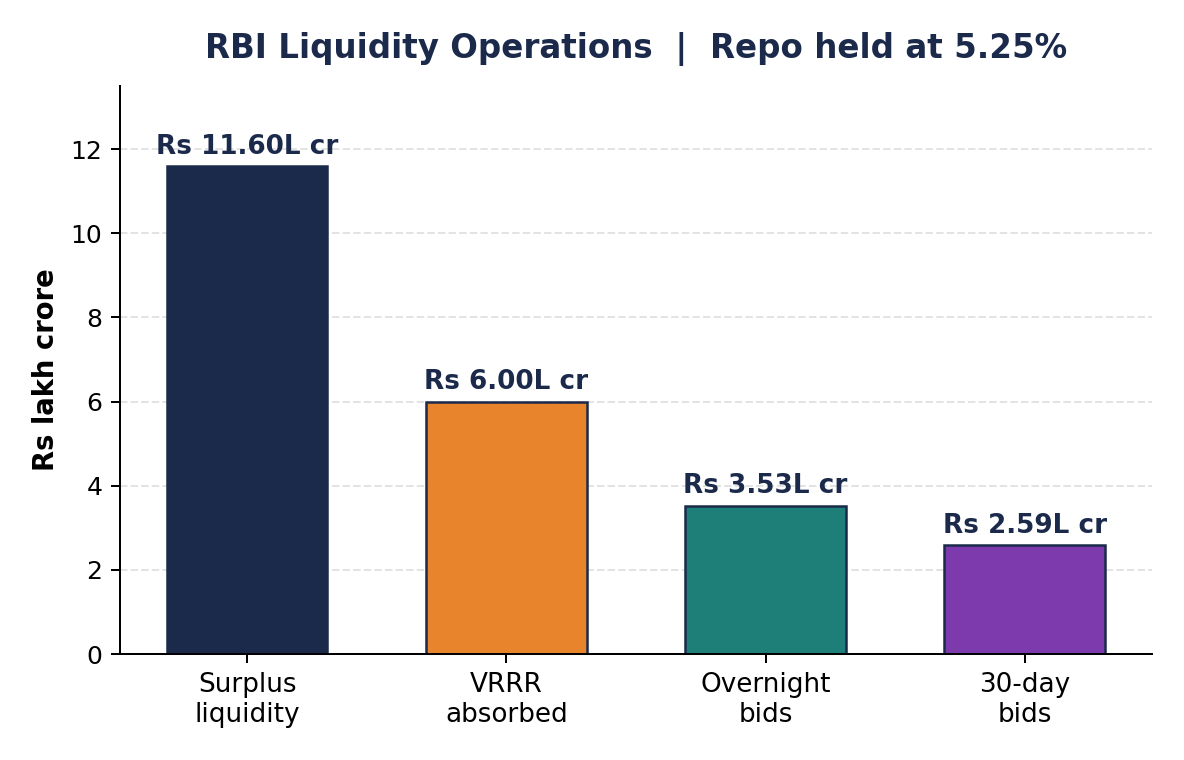
The RBI withdrew about Rs 6 lakh crore from the banking system on 7 September 2026 via a Variable Rate Reverse Repo (VRRR) as surplus liquidity ballooned.
Key facts
Surplus liquidity had reached Rs 11.6 lakh crore, nearly 4% of banking-system deposits.
RBI accepted Rs 3.53 lakh crore in overnight and Rs 2.59 lakh crore in 30-day bids.
The repo rate stands at 5.25% with a neutral stance; SDF 5.00%, MSF 5.50%.
FY27 GDP growth projection was raised to 6.7%; the inflation forecast was cut.
Way forward
Liquidity absorption keeps overnight rates near the repo, preserving monetary-policy transmission.
Concept
VRRR absorbs liquidity; the LAF corridor = SDF (floor) < repo < MSF (ceiling).
Bar chart of RBI liquidity: Rs 6 lakh cr VRRR, Rs 11.6 lakh cr surplus, repo 5.25%. — StudyForGS
7. India to Host 18th BRICS Summit at Bharat Mandapam
IRBPSC: Prelims + Mains GS-II (International Relations)
Syllabus linkage
GS-II: India and the world (groupings, summits); Prelims: BRICS members, NDB, chairship, theme.
Context
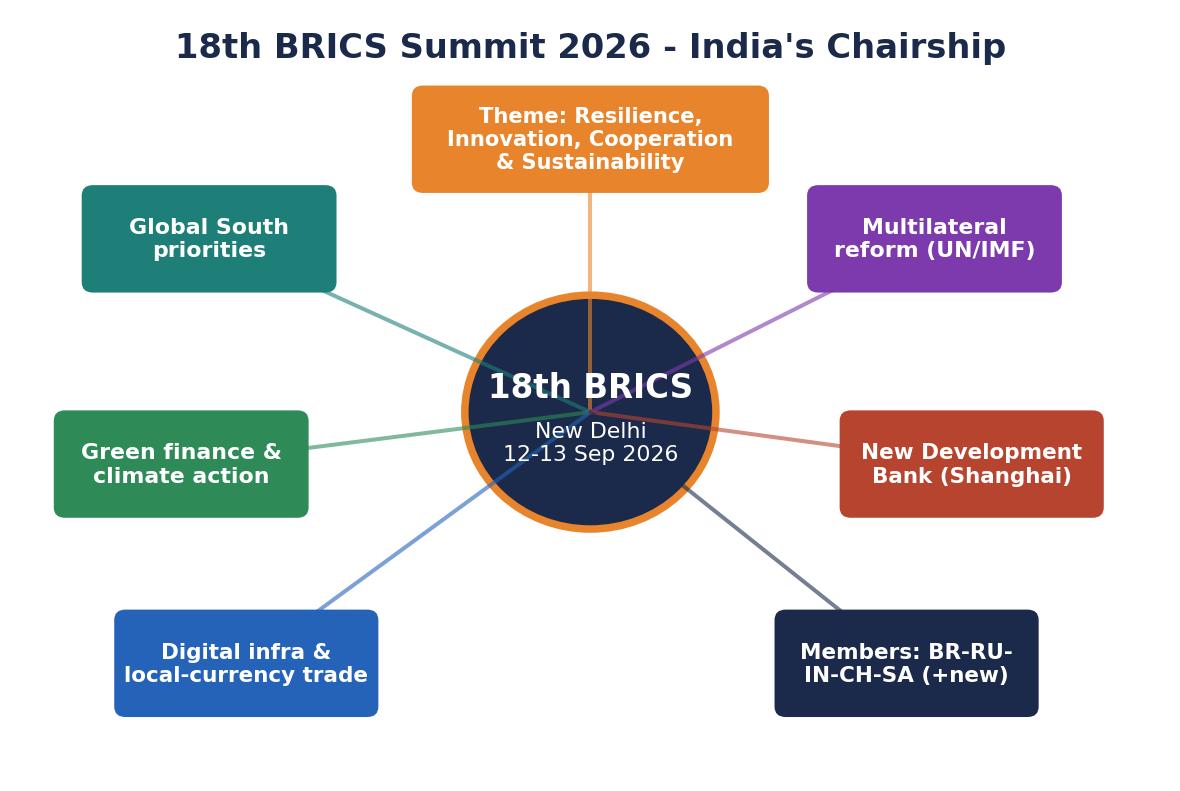
As the 2026 BRICS Chair, India hosts the 18th BRICS Summit at Bharat Mandapam, New Delhi on 12-13 September 2026.
Key facts
India's chairship theme: 'Building for Resilience, Innovation, Cooperation and Sustainability'.
Founding members: Brazil, Russia, India, China, South Africa; the grouping later expanded.
Agenda pillars: Global South, climate action, digital infrastructure, green finance, multilateral reform, local-currency trade.
The New Development Bank (NDB) is BRICS's flagship bank (HQ Shanghai, est. 2014).
Way forward
India can use the summit to voice Global South priorities and push UN/IMF reform.
Concept
BRIC (2006) became BRICS with South Africa (2010); works via consensus, no charter.
Mind map of the 18th BRICS Summit 2026: theme and agenda pillars. — StudyForGS
8. Defence Council Clears Rs 1.10 Lakh Crore Procurement
DEFENCEBPSC: Prelims + Mains GS-II (Science & Tech in Defence)
Syllabus linkage
GS-II: role and impact of science & technology (defence indigenisation); Prelims: DAC, Acceptance of Necessity.
Context
The Defence Acquisition Council (DAC), chaired by the Defence Minister, accorded Acceptance of Necessity for procurements worth about Rs 1.10 lakh crore.
Key facts
Approvals include CBRN reconnaissance vehicles, radars, advanced light helicopters and marine gas turbines.
Strong thrust on Atmanirbharta (self-reliance) and Make-in-India in defence.
Acceptance of Necessity (AoN) is the first step in the defence capital-acquisition process.
Way forward
Faster contract-signing and private-sector participation can cut import dependence.
Concept
DAC is the apex defence-procurement body under the Ministry of Defence.
9. PM-KISAN Extended up to 2030-31 with Rs 3.15 Lakh Crore
The Union Cabinet approved a proposal to raise the number of Supreme Court judges by 4, aiming to ease case pendency.
Key facts
SC strength is fixed by the Supreme Court (Number of Judges) Act, 1956, amended periodically.
Judges are appointed by the President through the Collegium (CJI + 4 senior-most judges).
Article 124 governs the establishment and composition of the Supreme Court.
Way forward
More judges plus tech (e-courts, virtual hearings) can cut the large case backlog.
Concept
Present sanctioned strength was 34 (CJI + 33 judges); the 1956 Act sets the ceiling.
11. Rajnath Singh Visits Sri Lanka to Deepen Defence Ties
IRBPSC: Prelims + Mains GS-II (International Relations)
Syllabus linkage
GS-II: India and the neighbourhood; Prelims: Neighbourhood First, SAGAR, IOR.
Context
Defence Minister Rajnath Singh visited Sri Lanka (8-10 September 2026) to strengthen defence and maritime-security cooperation.
Key facts
Talks covered defence, maritime security and regional cooperation under Neighbourhood First.
Sri Lanka is central to India's Indian Ocean Region (IOR) security and the SAGAR vision.
Builds on growing India-Sri Lanka connectivity and energy cooperation.
Way forward
Deeper naval exercises and capacity-building can counter external influence in the IOR.
Concept
SAGAR = Security and Growth for All in the Region (India's maritime doctrine, 2015).
Data point of the day
GSDP Rs 9.91 lakh cr | 14.9% growth
Bihar's Economy (Economic Survey 2025-26) Bihar's GSDP touched Rs 9,91,997 crore (2024-25, current prices), growing 14.9% against India's 12.0%; per-capita income rose to Rs 76,490. Sectoral share of GSVA: services 54.8%, industry 26.8%, agriculture 18.3%.
Prelims rapid-fire
A global credit-rating agency upgraded India's sovereign rating from BBB+ to A- (2 Sept 2026).
India logged 7.8% GDP growth in Q1 FY27, the fastest among major economies.
8 September is observed as International Literacy Day (UNESCO).
Bihar's makhana farmers get up to Rs 72,750/hectare subsidy under the development scheme.
Air Vice Marshal Shakti Sharma became the first non-medical woman two-star officer in India's defence forces.
Practice MCQs — BPSC Prelims pattern
Q1. With reference to the Sone (Son) river, consider the following statements:
1. It is a right-bank tributary of the Ganga.
2. It originates near Amarkantak.
3. The Indrapuri Barrage is built on it.
Which of the above are correct?
1 and 2 only
2 and 3 only
1 and 3 only
1, 2 and 3
Show answer
Answer: D The Son is a right-bank tributary of the Ganga, rises near Amarkantak (MP), and the Indrapuri Barrage (Dehri) is built on it in Bihar.
Q2. The 18th BRICS Summit (2026) is being hosted by which country and at which venue?
Brazil - Rio de Janeiro
India - New Delhi (Bharat Mandapam)
Russia - Kazan
South Africa - Johannesburg
Show answer
Answer: B India, as the 2026 BRICS Chair, hosts the 18th Summit at Bharat Mandapam, New Delhi (12-13 September 2026).
Mains practice question
Q. Inter-state river water disputes remain a recurring challenge to cooperative federalism in India. In this context, examine the significance of the recent Bihar-Jharkhand Sone river water-sharing agreement.
Hint / approach
Cover Article 262 and the ISRWD Act, 1956; limitations of tribunals; the negotiated-MoU model of cooperative federalism; and benefits to south Bihar's Sone Canal command area.